Zakat & Charity Fund Software for Trust Hospitals in Pakistan
Zakat management software for trust hospitals in Pakistan: how EHMS keeps zakat, sadqa and charity money on separate ledgers, from a hospital in Chishtian.
اقرأ المقالHow we built hospital management software for a trust eye hospital in Chishtian, moved it to the web as EHMS, and why it beat SAP and Odoo for them.
المقالات منشورة باللغة الإنجليزية.
This hospital management software did not start with a hospital. It started with a builder.
One of my real estate clients has been running Turner 10 for years, and he has come back to us for project after project. One evening he called about something that had nothing to do with plots. A friend of his, a man who lives in the UK, runs a trust eye hospital in Chishtian, in South Punjab. The hospital had software. A well-known vendor had sold it to them. The vendor would not update it, and when something went wrong, nobody came to fix it. So almost nothing the hospital actually did ran on it.
"Whenever they ask the vendor for a change, or to fix a problem," my client said, "the vendor doesn't do it. Can you go and have a look?"
I have thought about that call a lot since. A builder does not hand you his friend's hospital because of a brochure. He does it because your software has been carrying his business for years without letting him down. So in a way, this is a Turner 10 story too.
That call is how EHMS began. Below is the whole thing: the hospital, the deadline, the desktop system we built first, the web ERP that replaced it, and the reasons a hospital run by educated people chose a team from Bahawalpur over SAP and Odoo. If you run a hospital in Pakistan and you are tired of software that nobody will change, I think you will recognise a few things here. And if you are comparing hospital management software in Pakistan for your own hospital, this is how ours came to be.
I drove to Chishtian. I did not want a requirements document emailed to me, because a document only tells you what people think they do. I wanted to stand at the reception counter and watch what they actually do.
So I watched. A patient walks in, gets registered, waits, gets his eyes tested, sees the doctor, maybe gets sent to the lab, maybe gets a cataract operation booked, pays something or pays nothing, and goes home. Behind that simple line there were a dozen small decisions the old software knew nothing about. Who is a charity patient? Who approved the concession? Is this operation being paid from zakat, from sadqa, or from money a particular trustee gave last month? Who signed the cheque that went to the medicine supplier, and against which bill?
The staff had answers to all of these. The answers lived in registers, in a drawer of cheque counterfoils, and in the heads of a few senior people. The software sat in the corner and printed receipts.
Then I opened up the old system. It was written in old PHP, the kind of code where one change in billing quietly breaks something in the pharmacy. It had not been built to grow, and the vendor had clearly stopped wanting to touch it: no updates, and no fixes when an issue came up. I don't blame them entirely. When a codebase gets like that, every change is expensive and frightening. But a hospital cannot run on software that nobody is willing to change.
Here is where it got tight. The owner was in Pakistan for a short visit and was flying back to the UK in about a month. He wanted the new system running before he left, so he could see it with his own eyes rather than over a video call.
I told him honestly that a month was not enough. I asked for six weeks. He agreed, and I started the next day.
Six weeks for a full hospital ERP sounds reckless, and if I had been starting from zero it would have been. But I was not starting from zero. I had already built several ERP systems, and over the years I had collected a set of small scripts of my own for the repetitive work every ERP needs: the screens that list, add, edit and print, the same validation again and again. Generative AI had only just appeared, and it helped a little here and there. Mostly the speed came from not reinventing anything I had already solved.
That first version was a desktop application in C#, with Telerik controls and themes so it looked clean on the hospital's computers. I built it with proper object-oriented design: loosely coupled modules, components I could reuse across departments, and a structure that could carry far more load than one hospital needed. Hospitals only ever get busier, and I did not want to rebuild it in two years.
Speed was the other thing I would not compromise on. A receptionist with a queue of patients will hate any screen that makes her wait. So I built a small in-memory store, a little like Redis, that holds frequently used data in memory for a while, so the common screens open instantly instead of going back to the database every time.
The financial side took the most thinking. I spent about ten days only on planning the accounts before writing any of it, because in a trust hospital the money is the part everyone will question later.
A charity hospital is not a normal business. Trustees give funds, and those funds are meant for specific things. Donors want to know their money reached patients. Auditors want every rupee traceable. So the system got a proper chart of accounts, cheque management from issue to clearance, supplier payments and full financial reports, all shaped around how this hospital actually receives and spends its money, not a generic accounting template with the word "hospital" pasted on top.
We moved the running data across from the old system and put the staff on the new one myself, on site. The hospital did not close for a single day. When I showed the owner the finished system, he told me he had not expected a system that large to be up and working in such a short time. He went back to the UK with the hospital running on it, and the hospital ran on that desktop software for several years.
After several years on the desktop system, the same client came back with a new contract. They liked the speed and they liked that the system did what they needed, so they did not want a different product. They wanted the same thing on the web: something the owner could open from the UK, that more than one branch could share, and that did not depend on one computer in one room.
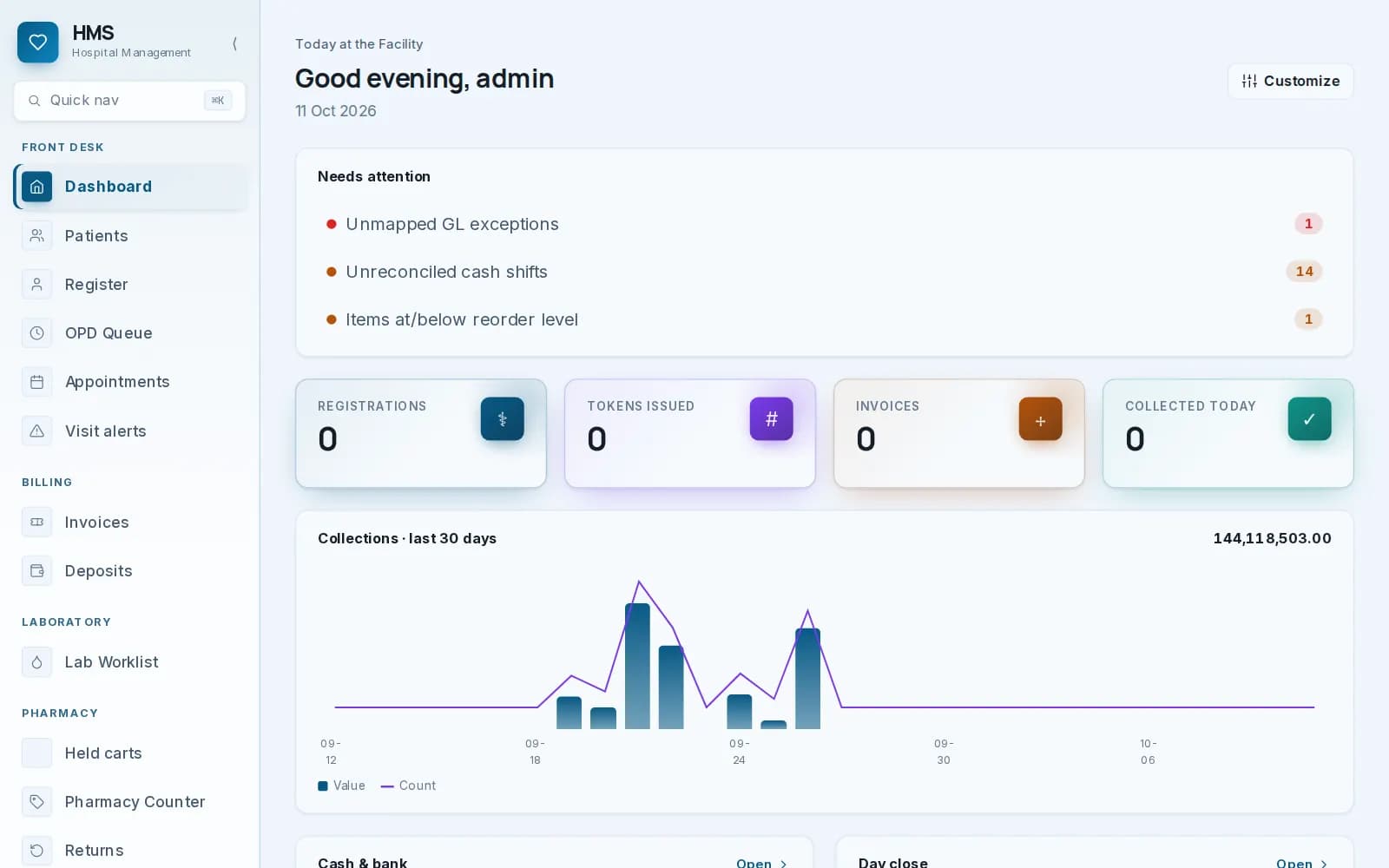
That second build is EHMS, our hospital management system, running at ehms.eaquirstech.com. It took three months, and the core workflows run about 95% faster than before.
The first time I gave them the demo, they were even more impressed than they had been with the desktop version. They did not run a long evaluation. They switched the hospital over to it straight away.
Then something happened that no amount of marketing can buy. Another hospital saw EHMS running and placed an order of its own.
Most hospital management software in Pakistan is a generic ERP with medical words on the menu. EHMS was built the other way round, from that reception counter in Chishtian outwards. Here is what a hospital actually gets.
This is the part I am proudest of. Most hospital software gives you a long menu and a blank form, and expects staff to remember which screen comes next. In practice they don't, so they skip steps, enter things late, or go back to the register because the register never confuses them.
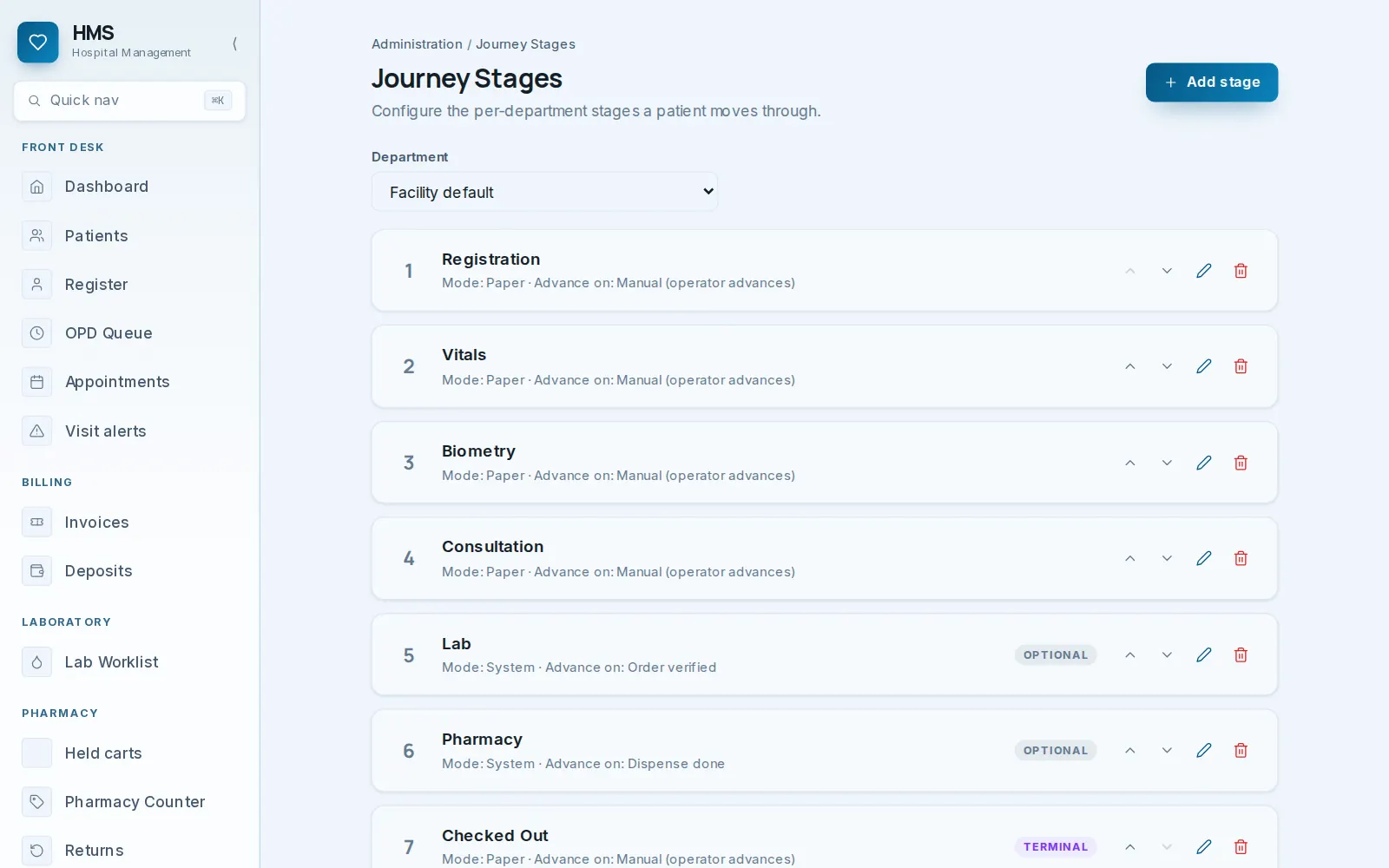
EHMS has journey stages. For each department, the hospital sets the steps a patient moves through. For the eye OPD that is registration, vitals, biometry, consultation, lab, pharmacy and check-out. Some steps are moved forward by a person, and some move by themselves: the lab step completes when the order is verified, the pharmacy step when the medicine is dispensed. So when a receptionist finishes registering a patient, she is not left looking at an empty screen. The system shows her what comes next, and the next person in the chain sees the patient arrive on their own screen.
The live OPD queue builds on that. It shows how many patients are on board, the longest wait, who has been waiting more than 15 or 30 minutes, and a box most hospitals would rather not see: patients who are stuck, because nobody moved them. A manager can see at a glance exactly where the day is jamming up.
A new member of staff can be useful on day one, because the software is quietly training her as she works. That came straight from watching the old system fail. The problem in most hospitals is not careless staff. It is software that expects them to remember a process nobody ever wrote down.
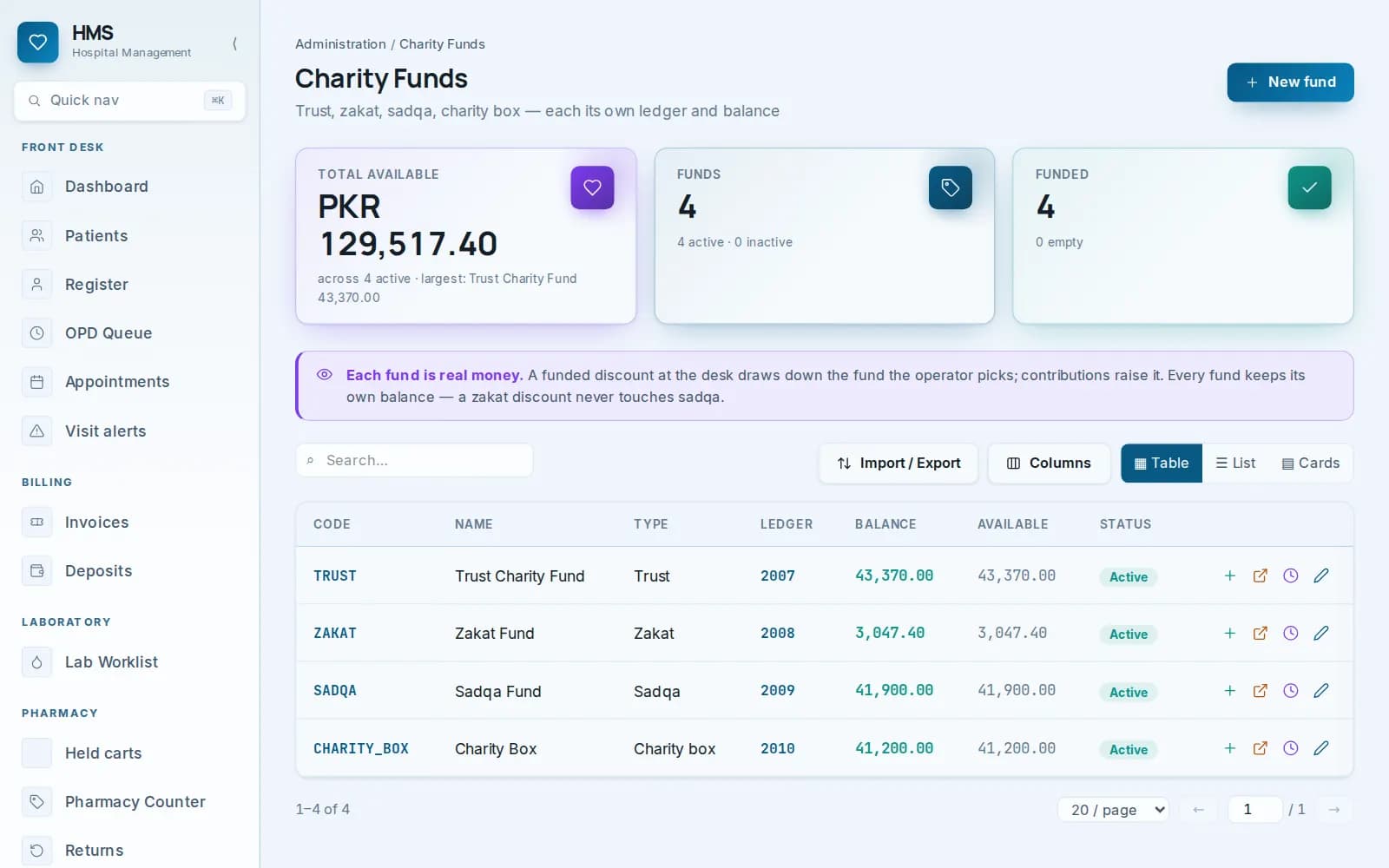
For a trust hospital, this was the heart of the job. EHMS keeps zakat, sadqa, the trust charity fund and the charity box as separate funds, and each one is a real account in the general ledger. A contribution raises a fund. When the desk gives a poor patient a funded discount, the operator picks the fund it comes from, and that fund goes down. A zakat discount never touches sadqa.
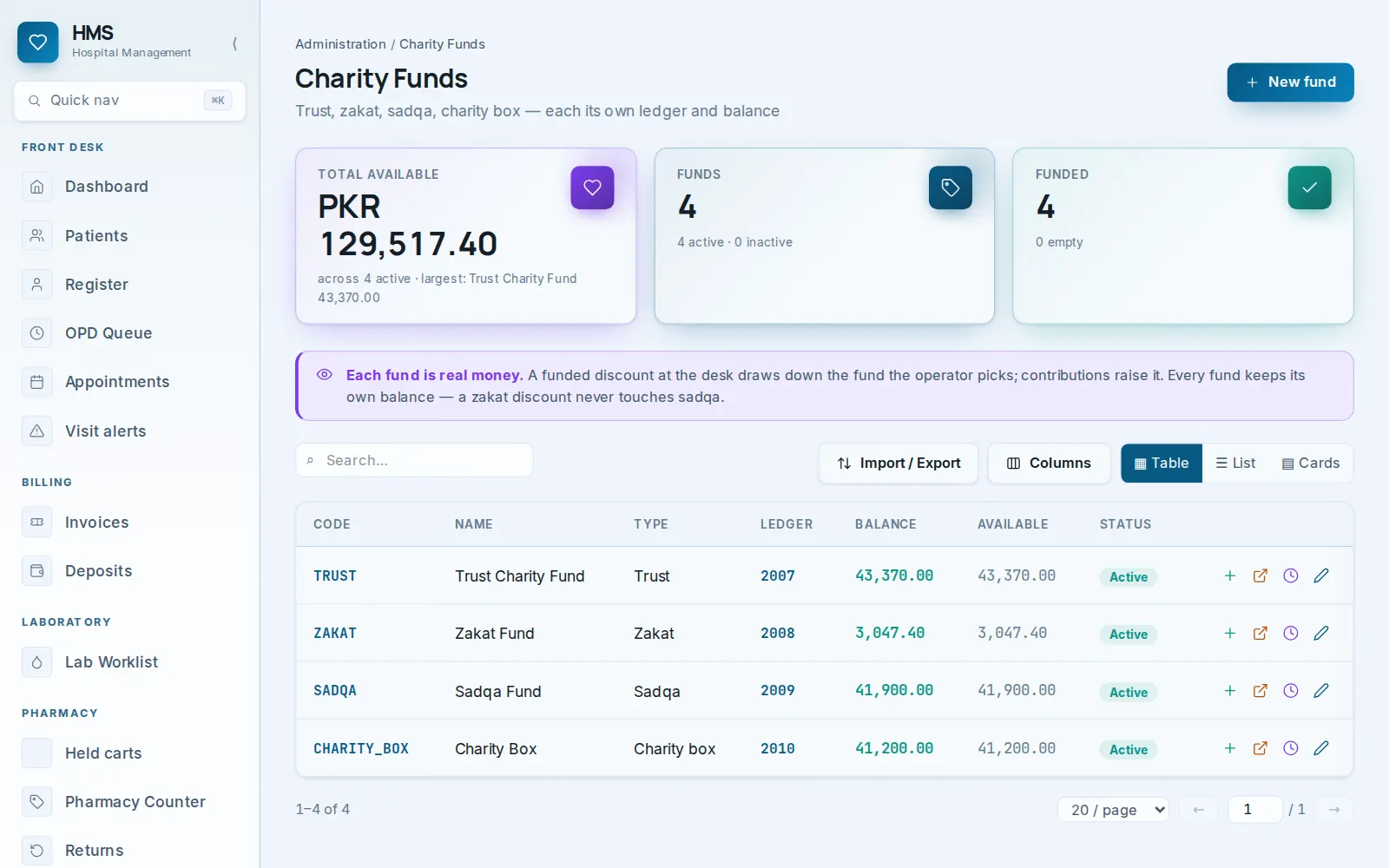
That sounds like a small rule. It is not. It is the difference between a trustee asking "where did my zakat go?" and getting a guess, and getting a ledger with every patient it paid for. If you are looking for zakat fund software for a charity hospital in Pakistan, this is the question to ask any vendor, us included: show me where a free patient's bill lands in the books.
Eye hospitals live on packages. A patient hears one price for cataract surgery, phaco with an IOL, and expects it to cover everything. EHMS lets the hospital build surgical packages from the services and items it already stocks, and records how far the price covers each line. Anything beyond those limits becomes billable instead of being quietly absorbed.
Then it tells you the truth about your prices: revenue by package, cases delivered, packages priced below what their inclusions cost, and package leakage, the extra medicine and consumables going out against a fixed price. For a charity hospital doing hundreds of operations, those numbers decide whether the next camp is affordable.
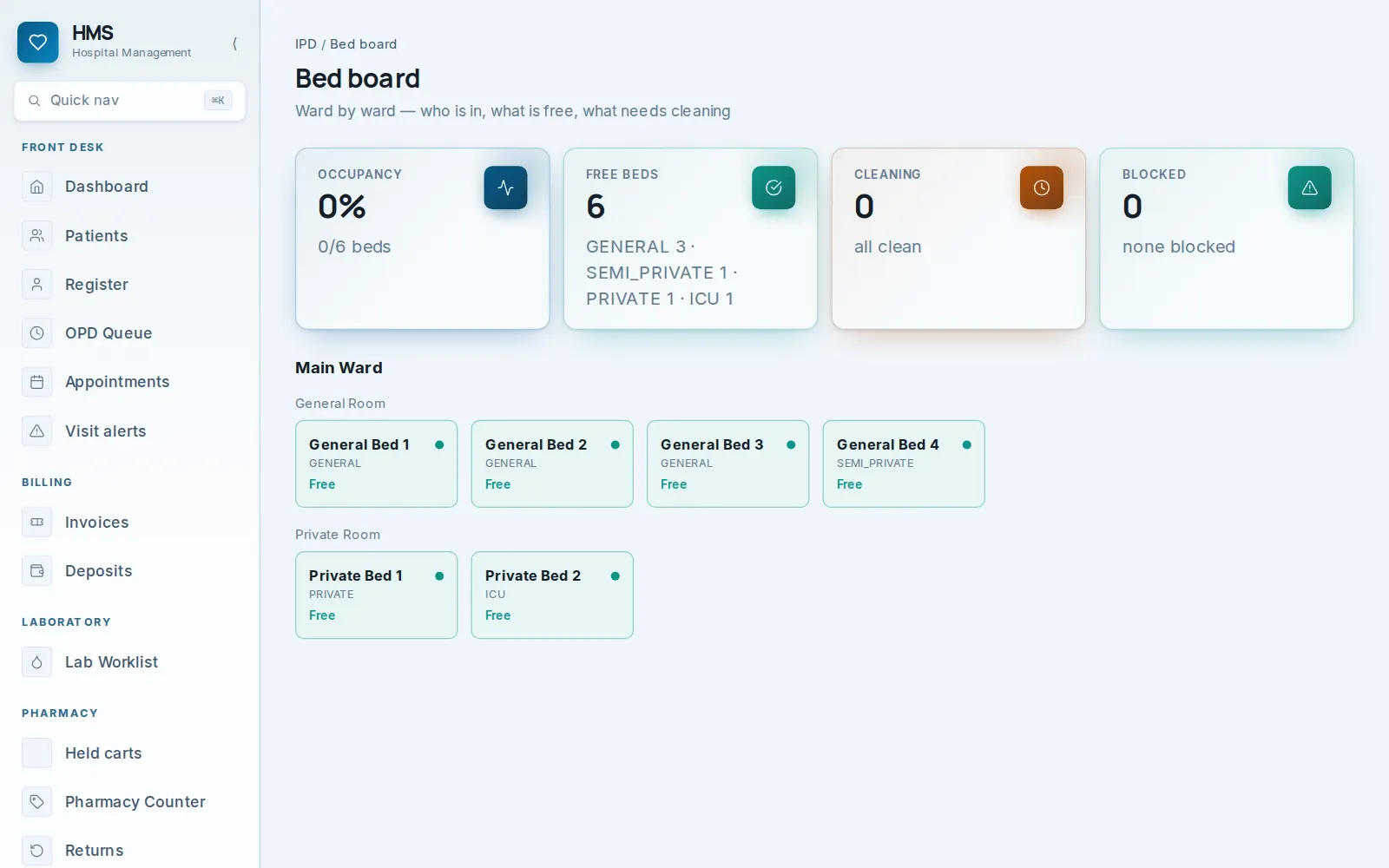
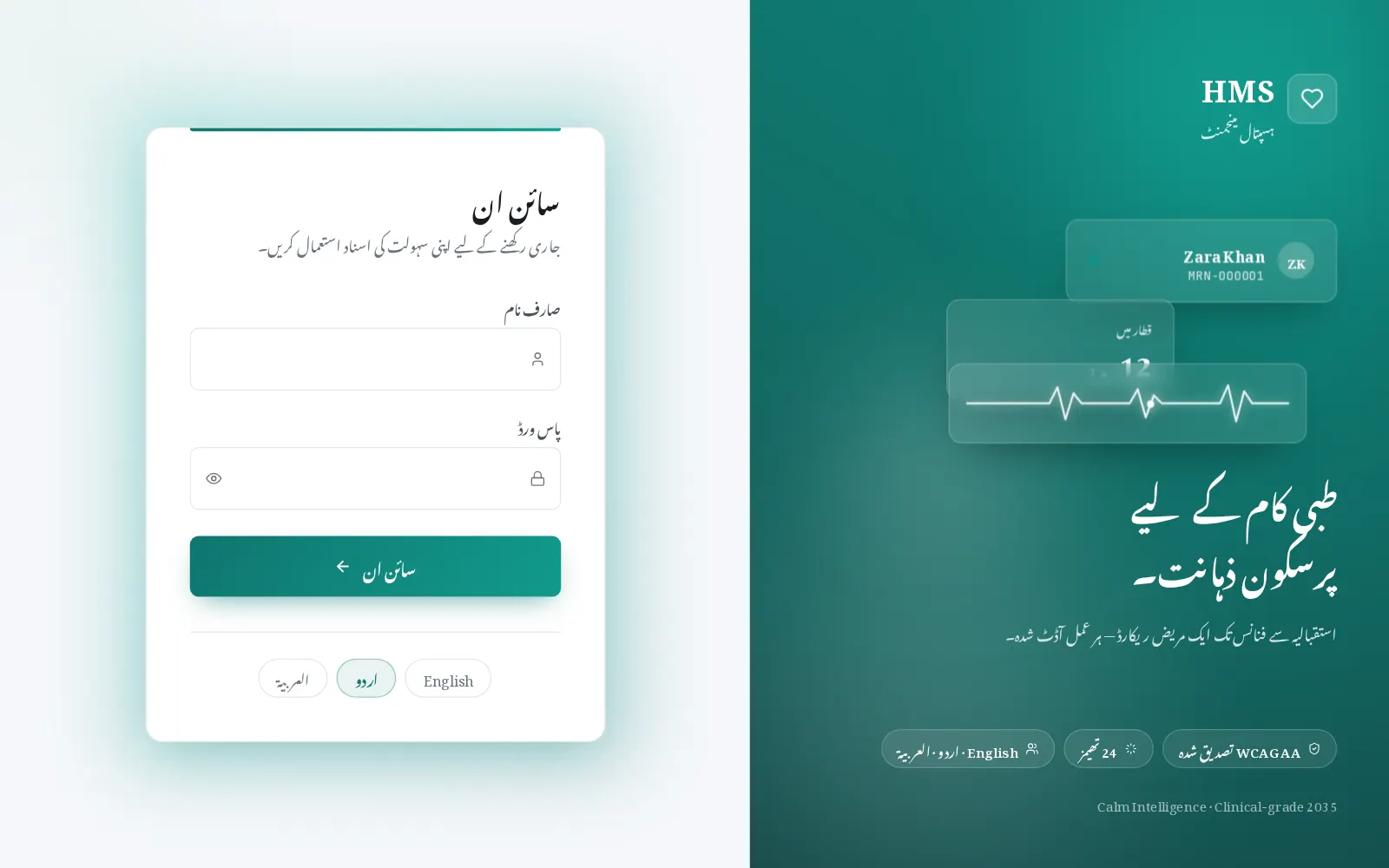
It runs in English, Urdu and Arabic, with 24 themes, and it is built to the WCAG AA accessibility standard so screens stay readable for staff who are on them all day. It also comes in a lighter clinic edition and runs several branches under one login.
I want to be fair here. SAP and Odoo are excellent products. The people behind this hospital are educated and know good software when they see it. They could have bought either one, and they knew exactly what they were choosing between.
They chose us for four reasons, and I think they apply to most hospitals in Pakistan:
Whether you choose EHMS or any other hospital management system, ask these questions first. I learned most of them from watching what went wrong with the old vendor.
What is hospital management software? Hospital management software, also called a hospital management system (HMS) or hospital ERP, is one system for running a hospital: patient registration, OPD and IPD, laboratory, pharmacy, procurement, billing, insurance and accounts. A good one connects these departments so that information is entered once and reaches everyone who needs it.
Is EHMS suitable for an eye hospital or a trust hospital? Yes. It was first built for a trust eye hospital in Chishtian. It has biometry in the patient journey, surgical packages for operations like phaco and IOL cataract surgery, and separate zakat, sadqa, trust and charity-box funds.
Is EHMS available in Urdu? Yes. Every screen runs in Urdu, right to left, with Nastaliq or Naskh text, and each user can switch between Urdu, English and Arabic. Reception, pharmacy and accounts staff work in whichever language they read fastest.
کیا ہسپتال کا سافٹ ویئر اردو میں دستیاب ہے؟ جی ہاں۔ EHMS کی ہر اسکرین اردو میں دائیں سے بائیں چلتی ہے، نستعلیق یا نسخ فونٹ کے ساتھ۔ ریسیپشن، فارمیسی اور اکاؤنٹس کا عملہ جس زبان میں آسانی سے پڑھ سکے، اسی میں کام کرتا ہے، اور ہر صارف اردو، انگریزی اور عربی میں سے اپنی زبان خود چن سکتا ہے۔ زکوٰۃ، صدقہ اور ٹرسٹ فنڈ کا حساب بھی الگ الگ رکھا جاتا ہے، تاکہ ٹرسٹی ہر روپے کا حساب دیکھ سکیں۔ پوری رہنمائی اردو میں: Hospital Software in Urdu
Can hospital software manage zakat properly? EHMS keeps zakat in its own fund with its own ledger account. Contributions go in, funded discounts for patients come out, and zakat is never mixed with sadqa or general donations, so trustees and auditors can trace every rupee.
Can you replace our current hospital software without stopping the hospital? Yes. We did exactly that in Chishtian: we moved the data across from the old PHP system ourselves, put the staff onto the new one in person, and the hospital did not close for a single day.
How long does it take? The first desktop version took six weeks, and the hospital ran on it for several years. The full multi-branch web ERP took three months. Your timeline depends on your departments and how much data has to move.
How much does hospital management software cost in Pakistan? EHMS starts from PKR 1.5 lakh. It depends on how many departments, branches and users you have, and how much data needs migrating. Our cost calculator gives a rough range in a minute, and a short call gets you an exact quote.
Do you only work in Bahawalpur and South Punjab? Our office is in Bahawalpur, so hospitals in Bahawalpur, Chishtian, Bahawalnagar, Rahim Yar Khan and Multan are a short drive away and a site visit is easy. We also work with hospitals across Punjab and the rest of Pakistan, and with owners abroad, like this one in the UK.
Most of the hospitals I talk to are not looking for a fancy system. They want one that does what their staff already do, and a team that will still pick up the phone next year.
If that sounds like your hospital, start with our hospital management software page and the EHMS case study. If you are a property developer who wants the software that started all this, read how Turner 10 runs 17 housing projects. Then send us a short brief: how many beds, which departments, how many branches, and what your current system cannot do. We will come back with a written plan within 48 hours, and if you are anywhere in South Punjab, I will probably come and see your hospital myself.
أجب عن ثلاثة أسئلة سريعة وسنرسل لك خطة مكتوبة تشمل النطاق والفريق والجدول الزمني والتكلفة التقديرية.
النشرة الشهرية
ما نجح في مشاريع عملاء حقيقية، وما لم ينجح، والأرقام وراء ذلك. قصيرة بما يكفي لتقرأها مع قهوتك.
Zakat management software for trust hospitals in Pakistan: how EHMS keeps zakat, sadqa and charity money on separate ledgers, from a hospital in Chishtian.
اقرأ المقال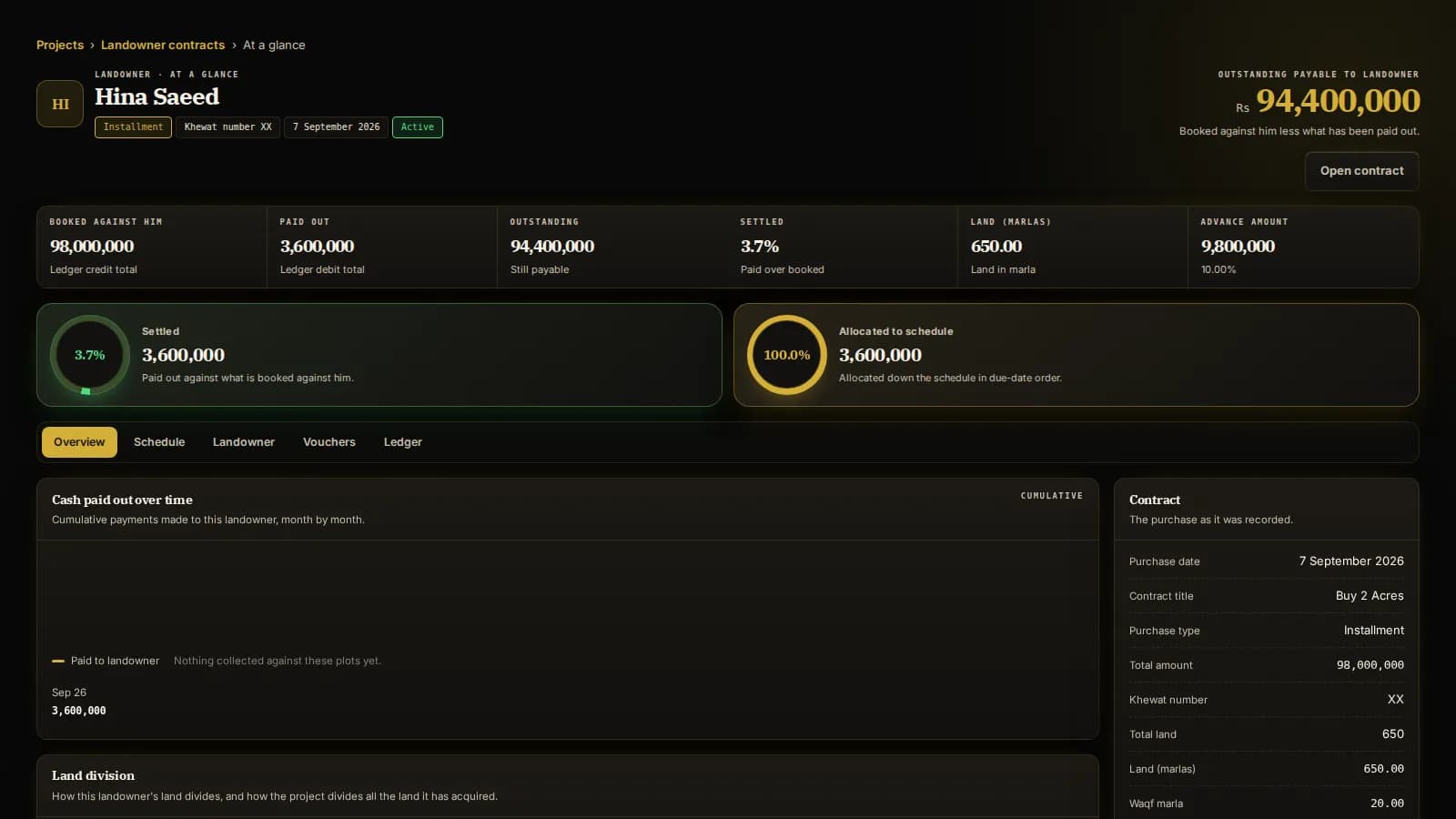
Turner 10, a real estate ERP built in Bahawalpur, has run housing schemes in Bahawalpur, Yazman and Khairpur Tamewali since 2016, in Urdu, English and Arabic.
اقرأ المقال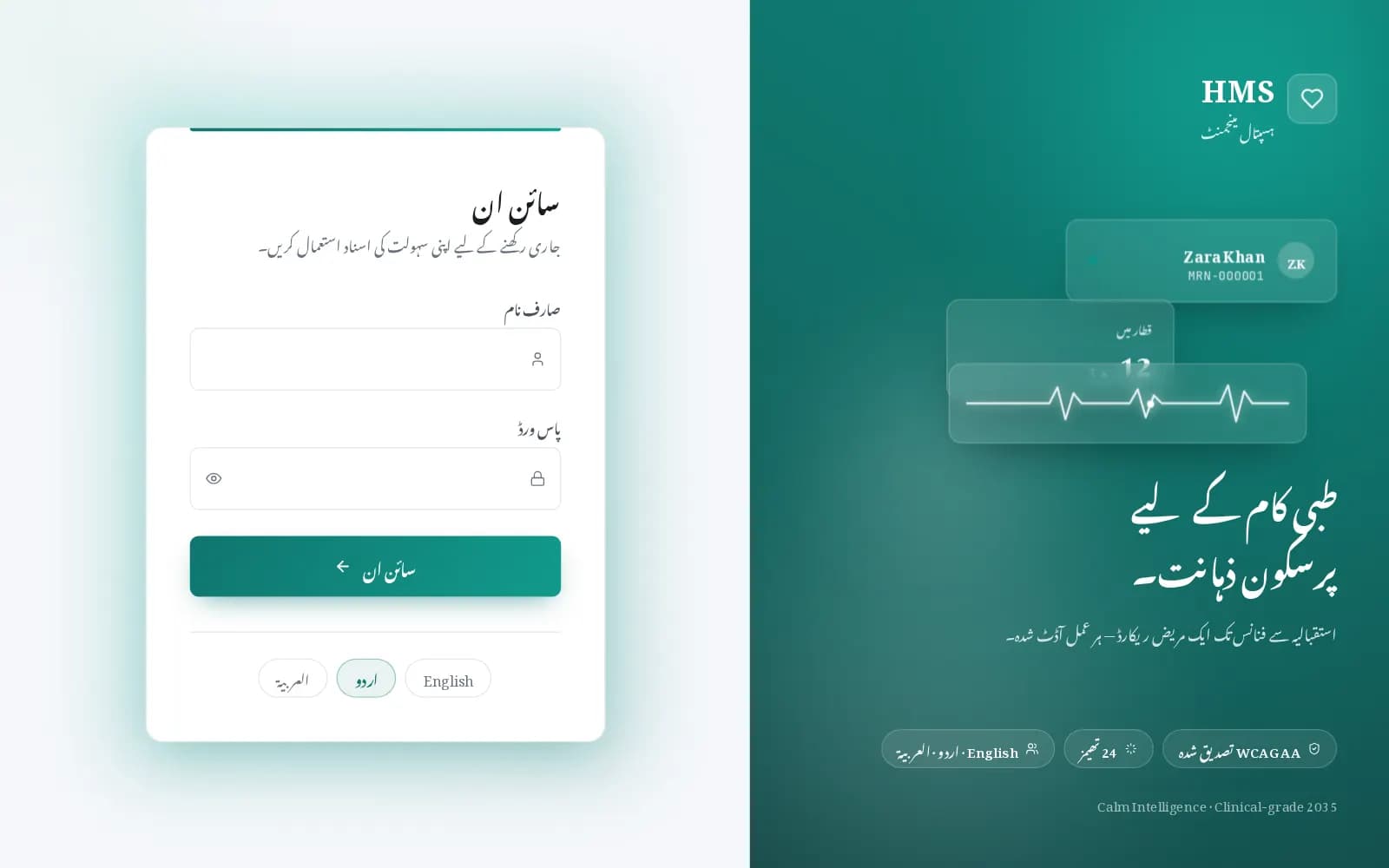
Hospital software in Urdu: Hospital Management System kya hai, OPD، لیب، فارمیسی، بلنگ اور زکوٰۃ فنڈ ایک سسٹم میں، اردو میں مکمل رہنمائی۔
اقرأ المقال