Custom ERP Development Cost in 2026: Real Numbers From Systems We've Built
What custom ERP development costs in 2026: real ranges from hospital, real estate and jewellery ERPs we built, what drives the price, and when Odoo wins.
اقرأ المقالCustom ERP, Odoo or ERPNext? An honest comparison of cost, fit and upgrades, a 10-question scorecard, and when we tell clients to buy instead of build.
المقالات منشورة باللغة الإنجليزية.
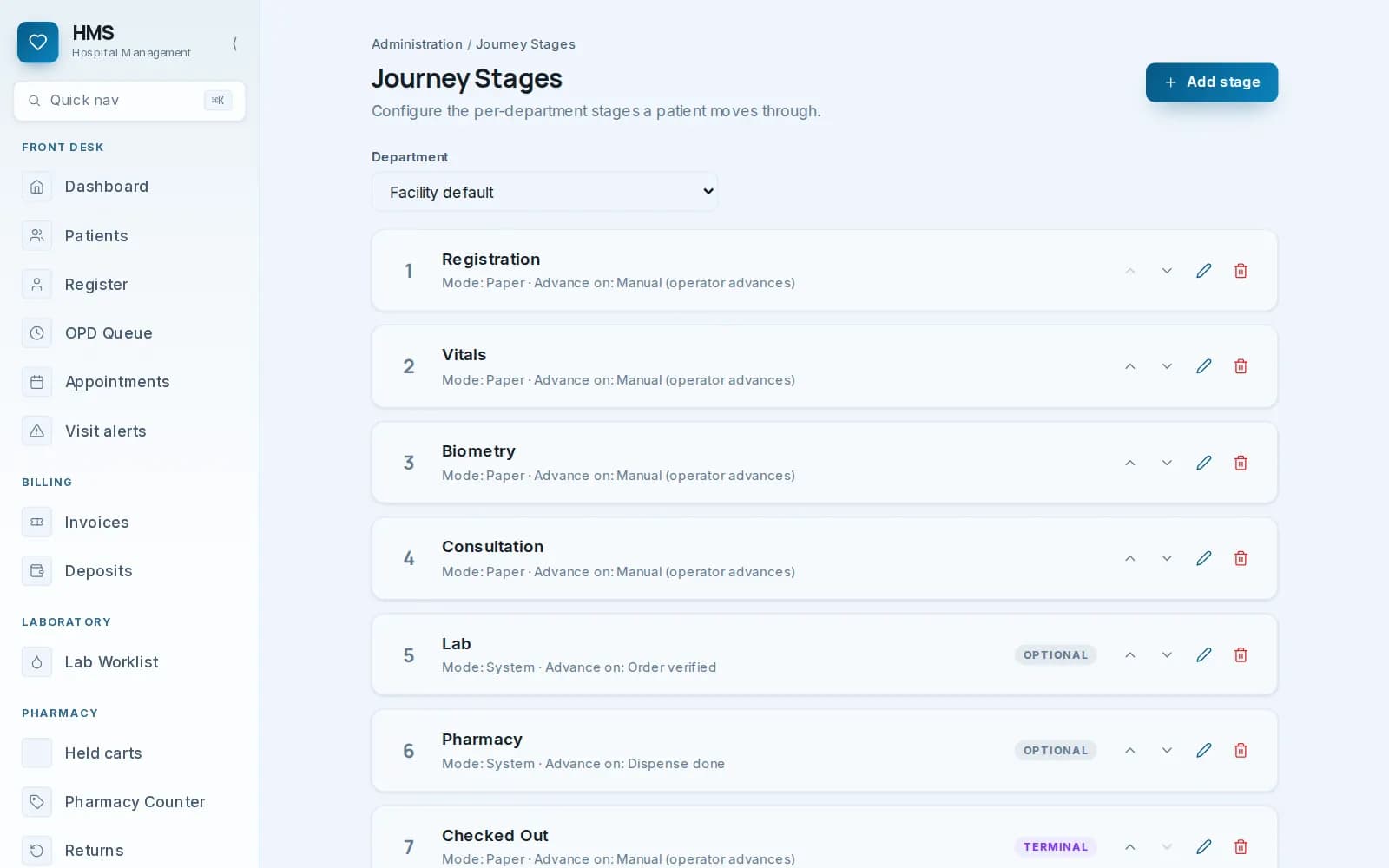
I build custom ERPs for a living, so you'd expect this article to end with "build custom". Often it doesn't.
Odoo and ERPNext are good software. Thousands of businesses run on them happily, and for many companies they're the right answer: live sooner, cheaper to start, and maintained by someone else. The trust hospital behind our EHMS looked seriously at SAP and Odoo before choosing us, and they were right to.
So here is how I'd decide if I were in your seat, including the cases where I'd tell you not to hire us.
Odoo is a modular business suite: accounting, inventory, sales, manufacturing, HR and dozens more apps that share one database. There's a free open-source Community edition and a paid Enterprise edition priced per user, with hosting from Odoo or a partner. Customisation ranges from point-and-click (Studio, on Enterprise) to custom Python modules, usually written by an implementation partner.
ERPNext is an open-source ERP built on the Frappe framework, strong in accounting, inventory and manufacturing. The software is free; you pay for hosting, either Frappe's own cloud or a server you run, and for whoever implements and customises it.
A custom ERP is built for your business from the data model up. You pay for the build and for support, but no per-user licences, and every screen exists because someone in your business needed it. For the systems we build, that's typically $15,000 to $56,000 over 7 to 14 weeks. I've broken that down in what a custom ERP costs.
Be honest with yourself about these, because they're common.
If most of those describe you, buy. Spend the money you saved on a good implementation partner and on training, which is where packaged ERP projects usually succeed or fail.
Custom earns its cost in a different set of situations.
Every business has a few rules that make it different, and they're usually the rules that touch money.
At the trust hospital, zakat, sadqa, trust and charity-box funds each had to sit on its own ledger, so a zakat discount could never draw from sadqa. In Turner 10, our real estate ERP, one plot sale can involve a freelancer, a sales officer and an investor's agent, each paid differently, so the system has five kinds of agent. In Ophir, every piece of jewellery carries its weight and karat from purchase to a sale at that day's gold rate.
You can build any of those into Odoo or ERPNext with custom modules. The question is whether you'd end up with a packaged ERP plus a large custom layer, paying for both, and owning the hardest part anyway.
Licence costs that look small for ten users look different for two hundred across several branches. A custom system has no per-user fee. Do the maths for your own numbers: users × monthly per-user price × 36 months, plus partner fees, against a custom build plus three years of support.
This is the cost people discover in year two. Packaged ERPs release new major versions regularly, and heavy custom modules often have to be reworked to move to them. Skip upgrades and you drift away from security fixes and new features; keep up and you pay for the rework each time. The more you customise, the bigger that bill. A custom ERP has upgrades too, but they're your upgrades, on your schedule, made by people who know the code.
Odoo and ERPNext support many languages, including right-to-left ones. Translation of standard screens is the easy part. A custom ERP lets you design the daily screens for the people who use them: Turner 10 and EHMS run in English, Urdu and Arabic, with layouts, fonts and printed documents designed for right-to-left rather than mirrored.
When the trust hospital chose us, part of the reason was simple: nobody from a global ERP partner was going to drive to Chishtian. I went there, stood at the counters, sat with the accounts staff, and learned how trustee funds were handled before writing a screen. On go-live we moved the running data and the staff across in person, and the hospital didn't close for a day.
It doesn't have to be all or nothing.
Answer each with yes or no.
Mostly yes: buy Odoo or ERPNext. Mostly no: a custom ERP is likely worth it. Split down the middle: look at the middle path, a packaged core with a small custom app, or an industry product.
If your answers point to Odoo or ERPNext, we'll say so in the written plan. We'd rather lose a project than build an expensive system you didn't need, and the plan is yours to keep either way. If they point to custom, we'll show you what the first version would include, what it costs and how long it takes, using the same estimator as every price on our custom ERP development page.
If you run a housing scheme or sell plots on installments, our Odoo vs real estate ERP comparison covers that case in detail. To put numbers on the build side, use the real estate ERP, retail ERP and POS and hospital management system estimators. If you would rather start from a ready product, X3 is the retail ERP we built ourselves, one of our ready-made products, with packages from PKR 350,000.
Is a custom ERP better than Odoo? Not in general. Odoo is better for businesses with standard processes that want to be live quickly. A custom ERP is better when your core rules don't fit, when per-user fees will grow large, or when heavy customisation would make upgrades expensive.
Is ERPNext really free? The software is open source and free to use. You still pay for hosting, implementation, customisation and support, which are where most of the cost of any ERP lies.
How much does it cost to customise Odoo? It depends on how far your processes are from the standard modules. Small changes can be configuration; large ones become custom modules that also need maintaining through upgrades. Get a partner's estimate for both the build and the upgrade cost.
Can a custom ERP work alongside Odoo or ERPNext? Yes. A common pattern is to keep accounting in the packaged ERP and build a custom application for the workflow it can't handle, connected through APIs.
How long does a custom ERP take compared with Odoo? Standard Odoo or ERPNext modules can be live in days to weeks. The custom systems we build take 7 to 14 weeks, with a working demo every week.
Not sure which side you're on? Get a free project plan. We'll tell you honestly whether to build, customise or buy.
أجب عن ثلاثة أسئلة سريعة وسنرسل لك خطة مكتوبة تشمل النطاق والفريق والجدول الزمني والتكلفة التقديرية.
النشرة الشهرية
ما نجح في مشاريع عملاء حقيقية، وما لم ينجح، والأرقام وراء ذلك. قصيرة بما يكفي لتقرأها مع قهوتك.
What custom ERP development costs in 2026: real ranges from hospital, real estate and jewellery ERPs we built, what drives the price, and when Odoo wins.
اقرأ المقالOdoo or a real estate ERP built for Pakistan? Who each one needs on staff, where customization costs grow, and which one a housing scheme's team can run every day.
اقرأ المقال
What clinic management software in Pakistan should do, free vs paid vs custom, what a basic system costs, and the questions to ask before you choose one.
اقرأ المقال