Custom ERP Development Cost in 2026: Real Numbers From Systems We've Built
What custom ERP development costs in 2026: real ranges from hospital, real estate and jewellery ERPs we built, what drives the price, and when Odoo wins.
اقرأ المقالWhat an AI agent costs to build and run in 2026: real ranges, what drives the price, how to estimate token costs, and when adding AI to your system is cheaper.
المقالات منشورة باللغة الإنجليزية.

An AI agent has two prices, and most quotes only mention one.
The first is the build: the weeks it takes to make the agent useful, safe and connected to your data. The second arrives every month after launch, because every question the agent answers costs money at the model provider. A cheap build with an expensive design can cost more in a year than a careful build that's cheap to run.
We build software with a team of AI agents every day, and we build agents for clients, so I'll cover both prices, with numbers where we have them and a formula where you need your own.
Our cost estimator puts a typical standalone AI assistant at $12,000 to $19,500, built in six to nine weeks. That's an assistant with user accounts, document reading, a connection to one of your systems and an admin side to watch what it does.
Two cheaper cases are worth knowing about:
There are three ways to make a model useful on your business, and they cost very different amounts.
| Approach | Use it when | Effect on cost |
|---|---|---|
| A well-written prompt | The job is general: summarise, classify, draft | Lowest. But the model knows nothing about your data |
| Retrieval (RAG) | Answers must come from your documents or database | Moderate. Most of the work is cleaning and indexing the data |
| Fine-tuning | You need a fixed style or format at very high volume | Highest, and it has to be redone when your data changes |
Most business agents need retrieval. Very few need fine-tuning. If someone proposes fine-tuning first, ask why retrieval wouldn't do.
This is the cost people underestimate most. An agent that answers from your documents is only as good as those documents. If your policies live in five versions of the same PDF, your product data has three spellings for every item, or the answer to a common question isn't written down anywhere, the first weeks go on fixing that. No model fixes it for you.
An agent that only answers questions is one thing. An agent that books appointments, updates records or sends messages is another, because now it acts. Every action needs permissions, a log, and a decision about which ones a person approves first. In the agents we build, anything that moves money, deletes or changes records goes to a person before it happens, and the agent can only touch what the logged-in user could touch. That's extra work, and it's the work that stops an expensive mistake.
Reading from your CRM, writing to your ERP, sending through WhatsApp: each integration is its own small project, and each depends on that system's documentation. On OpenInterview.me, the assistant that turns a resume into a shareable profile sits inside a production app with accounts, Stripe billing and interview scheduling. The AI part was one feature among several, and that's typical.
Normal software is right or wrong in predictable ways. An AI agent can be right nine times and confidently wrong the tenth. So a serious agent ships with a set of test questions and expected answers, run again whenever the prompt or the model changes, plus logs of real conversations to learn from. It's not glamorous, and it's the difference between a demo and something your customers can rely on.
Model providers charge by the token, roughly by the amount of text going in and coming out. Prices vary a lot between models and change often, so check your provider's current price page. What you can do today is estimate the shape of your bill:
Monthly cost ≈ conversations per month × tokens per conversation × price per token
Say your agent handles 3,000 conversations a month. Each sends about 4,000 tokens to the model (the question, a few retrieved passages, the instructions) and gets 500 back. That's 12 million tokens in and 1.5 million out per month. Multiply each by your chosen model's price per million tokens and you have your bill.
A few things move it a lot:
We keep the model behind one interface in everything we build, so it can be switched between OpenAI, Claude and Gemini without rewriting the feature. When prices or quality change, which they do every few months, you can move.
Our prices are lower than a traditional build because we build with AI agents too: one plans, one drafts the architecture, two write the backend and interface, one tests and one deploys a preview, and a senior engineer reviews everything before release. Our estimator assumes that takes about 35% of the hours off a traditional build. I've written about how that works.
The irony is worth saying out loud: building an AI agent is one of the places where AI saves the least. The hard parts, deciding what the agent may do, cleaning the data, judging whether an answer is good enough, are human judgement. The agents speed up everything around them.
Related reading: MVP development cost in 2026 for the product around the agent, custom ERP development cost if the agent sits inside an ERP, and Claude vs ChatGPT for developers for choosing the model.
How much does it cost to build an AI agent in 2026? A typical standalone assistant is $12,000 to $19,500 over six to nine weeks in our estimator. Adding one AI feature to a system you already run usually costs less.
How much does an AI agent cost to run per month? It depends on volume and model. Estimate it as conversations per month, times tokens per conversation, times your model's price per token, then reduce it with smaller models for routine questions, tighter retrieval and caching.
Do I need RAG or fine-tuning? Most business agents need retrieval (RAG), so answers come from your own documents and data. Fine-tuning is for a fixed style or format at very high volume, and few projects need it.
Can you add AI to our existing software instead of building something new? Yes, and it's often the better route. See AI agent development and LLM integration for the kinds of features that fit inside an existing ERP, CRM or SaaS.
Is our data used to train the AI provider's models? On the paid API terms of the major providers, your data is excluded from model training by default. Free consumer tiers can differ, so we don't use them for client work. We send the minimum a task needs and keep logs on your own servers.
If you have a task in mind for an agent, get a free project plan. We'll tell you whether it should be an agent, a feature, or a better search box.
أجب عن ثلاثة أسئلة سريعة وسنرسل لك خطة مكتوبة تشمل النطاق والفريق والجدول الزمني والتكلفة التقديرية.
النشرة الشهرية
ما نجح في مشاريع عملاء حقيقية، وما لم ينجح، والأرقام وراء ذلك. قصيرة بما يكفي لتقرأها مع قهوتك.
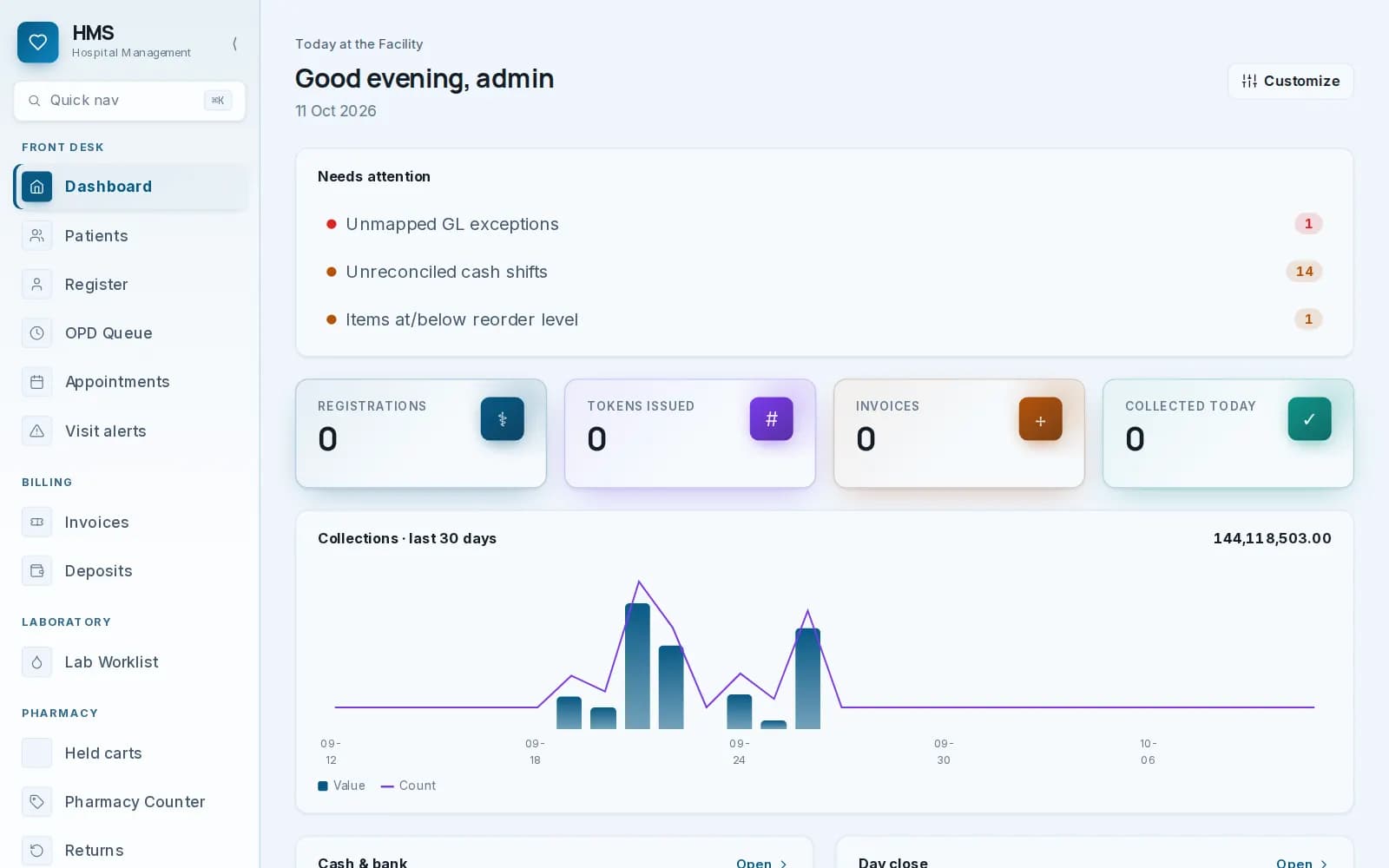
What custom ERP development costs in 2026: real ranges from hospital, real estate and jewellery ERPs we built, what drives the price, and when Odoo wins.
اقرأ المقال
Hospital management system price in Pakistan: EHMS from PKR 150,000 for a basic setup, what a custom build costs, why a full hospital ERP costs far more.
اقرأ المقال
Fix one bug in your Lovable or Replit app and ten more appear? Why the vibe coding doom loop happens, the prompts that prevent it, and when to call an engineer.
اقرأ المقال