Clinic Management Software in Pakistan: What It Should Do and What It Costs
What clinic management software in Pakistan should do, free vs paid vs custom, what a basic system costs, and the questions to ask before you choose one.
اقرأ المقالHospital management system price in Pakistan: EHMS from PKR 150,000 for a basic setup, what a custom build costs, why a full hospital ERP costs far more.
المقالات منشورة باللغة الإنجليزية.
"How much does a hospital management system cost?" is the first thing almost every hospital owner asks me. It's a fair question, and most vendors answer it badly. Some quote a low number for a demo version and charge for everything after. Others won't say anything until three meetings in.
So here's a straight answer, then the details behind it.
There are two routes, and they cost very different amounts:
Either way, the starting price is only the basic core. A full hospital ERP, with IPD, stores, accounts, panels, HR, charity funds and several branches, costs considerably more, because it is several systems working as one.
These numbers come from our own cost calculator and from building EHMS, the hospital ERP a trust eye hospital in Chishtian runs on. EHMS is priced in rupees. Custom builds are quoted in US dollars, so the rupee amount depends on the exchange rate on the day you sign.
Why is EHMS so much cheaper to start? Because it's already built for hospitals. The work was done once and is reused, so you pay to set it up for your hospital, not to build it from nothing.
When people compare quotes, they often compare a basic system from one vendor with a full system from another. Then the cheaper quote looks like a bargain until month three.
A hospital isn't one piece of software. It's a set of departments that each have their own work, joined by one patient record and one set of accounts:
The basic price covers the first five, done well. Each item after that adds real work, because it has its own rules and has to agree with everything else. On EHMS, the full web version took three months of focused work, and that was with a desktop version already behind us.
This is the biggest factor by far. A 20-bed hospital that needs OPD, lab and billing is a very different project from a 150-bed hospital that needs every department above.
A sensible plan starts with the departments every patient touches, then adds the rest in phases. That spreads the cost, and your staff learn the system one step at a time.
Patients, visit history, stock, supplier balances and open bills all live in your old system or your registers. Moving them is careful work: mapping fields, cleaning duplicates and checking totals before the switch.
When we replaced the old system at the Chishtian hospital, we moved the running data and switched the staff over on site. The hospital didn't close for a single day. That's the standard you should hold any vendor to, and it takes time to do properly.
If several hospitals or clinics share one system, every report has to work per branch and for the group. Stock moves between branches. Users only see their own branch unless they're allowed more. All of that has to be designed in from the start, not added later.
Panel companies come with their own rate lists, approvals, monthly statements and disputed claims. If a large share of your income comes through panels, this module pays for itself, but it adds to the build.
Lab analyzers, SMS and WhatsApp reminders, payment gateways and government or insurer portals each need an integration. Many analyzers can send results automatically, but it depends on the machine, so we check what yours support before quoting.
For trust hospitals, keeping zakat, sadqa and donations on separate ledgers isn't optional. Every free or discounted bill has to land in the right fund. We wrote about how that works in zakat and charity fund software for trust hospitals.
An Urdu or Arabic interface with a proper right-to-left layout adds work. So does running on a server inside the hospital, so departments keep working when the internet drops. Both are worth it for most hospitals in Pakistan.
| Ready-made, monthly fee | Custom-built | |
|---|---|---|
| Cost to start | Low | Higher |
| Monthly cost | Per user or per branch, every month | Hosting and support only |
| Fits how your hospital works | You adjust to the software | The software follows your process |
| Changes later | Wait for the vendor, or pay for each one | You own the code |
| If the vendor stops supporting it | You're stuck | The system is yours |
Ready-made software is often the right choice for a small clinic with a standard workflow (our guide to clinic management software in Pakistan covers what such a system should do and what it costs). It becomes expensive when you start paying for changes, for extra users, or for consultants to bend it to your process.
EHMS sits between the two columns. It's ready-built for hospitals, which is why it starts at PKR 150,000, and because we built it ourselves, we can change it to fit how your hospital works instead of making your staff work around it. For most hospitals in Pakistan, starting from EHMS is the cheapest route to a system that fits.
The last row matters more than people think. The Chishtian hospital came to us because its previous vendor would neither update its system nor fix its issues. They were paying for software that had stopped serving them, with no way out. We tell that full story in how we built EHMS.
If you're comparing with big platforms, we also wrote about custom ERP vs Odoo and ERPNext.
The build is not the only cost. Ask every vendor about these before you sign:
A good vendor answers all of these without hesitation, us included.
Running a hospital in the Gulf? We also write about hospital management software for Saudi Arabia, the UAE, Kuwait, Qatar, Oman and Bahrain, with Arabic support and local billing in mind.
What is the price of a hospital management system in Pakistan? Our ready-built EHMS starts from PKR 150,000 for a basic setup. A system built from scratch typically starts around $19,000 to $31,000 for a first version and takes 7 to 11 weeks. In both cases, a full hospital ERP with IPD, stores, accounts, panels, HR and multiple branches costs considerably more than the starting price.
Why is a full hospital ERP so much more expensive than the basic version? Because each department has its own rules and all of them must share one patient record and one set of accounts. Adding IPD, stores, accounts, panels, payroll and charity funds is several systems' worth of work, not a few extra screens.
Is it cheaper to buy ready-made hospital software? To start, yes. Over several years it can cost more, because of per-user fees, paid changes and the risk of being stuck if the vendor stops supporting it. For a small clinic with a standard workflow, ready-made software is often the right choice.
How long does it take to build a hospital management system? A first version usually takes 7 to 11 weeks. We built the first desktop ERP for a trust eye hospital in six weeks, and its full multi-branch web version, EHMS, in three months.
Can we build it in phases to spread the cost? Yes, and it's what we recommend. Start with the departments every patient touches, then add IPD, stores, accounts and branches once staff trust the first part.
Do you charge in rupees? EHMS is priced in rupees. Custom builds are quoted in US dollars, so the rupee amount depends on the exchange rate on the day you sign.
Every hospital is different, so the honest next step is a number for yours. Try the hospital management system cost calculator for a range in a minute, read about our hospital management software, or book a free 30-minute call. After the call, you get a written plan with scope, phases and price, and it's yours to keep even if you don't hire us.
أجب عن ثلاثة أسئلة سريعة وسنرسل لك خطة مكتوبة تشمل النطاق والفريق والجدول الزمني والتكلفة التقديرية.
النشرة الشهرية
ما نجح في مشاريع عملاء حقيقية، وما لم ينجح، والأرقام وراء ذلك. قصيرة بما يكفي لتقرأها مع قهوتك.
What clinic management software in Pakistan should do, free vs paid vs custom, what a basic system costs, and the questions to ask before you choose one.
اقرأ المقال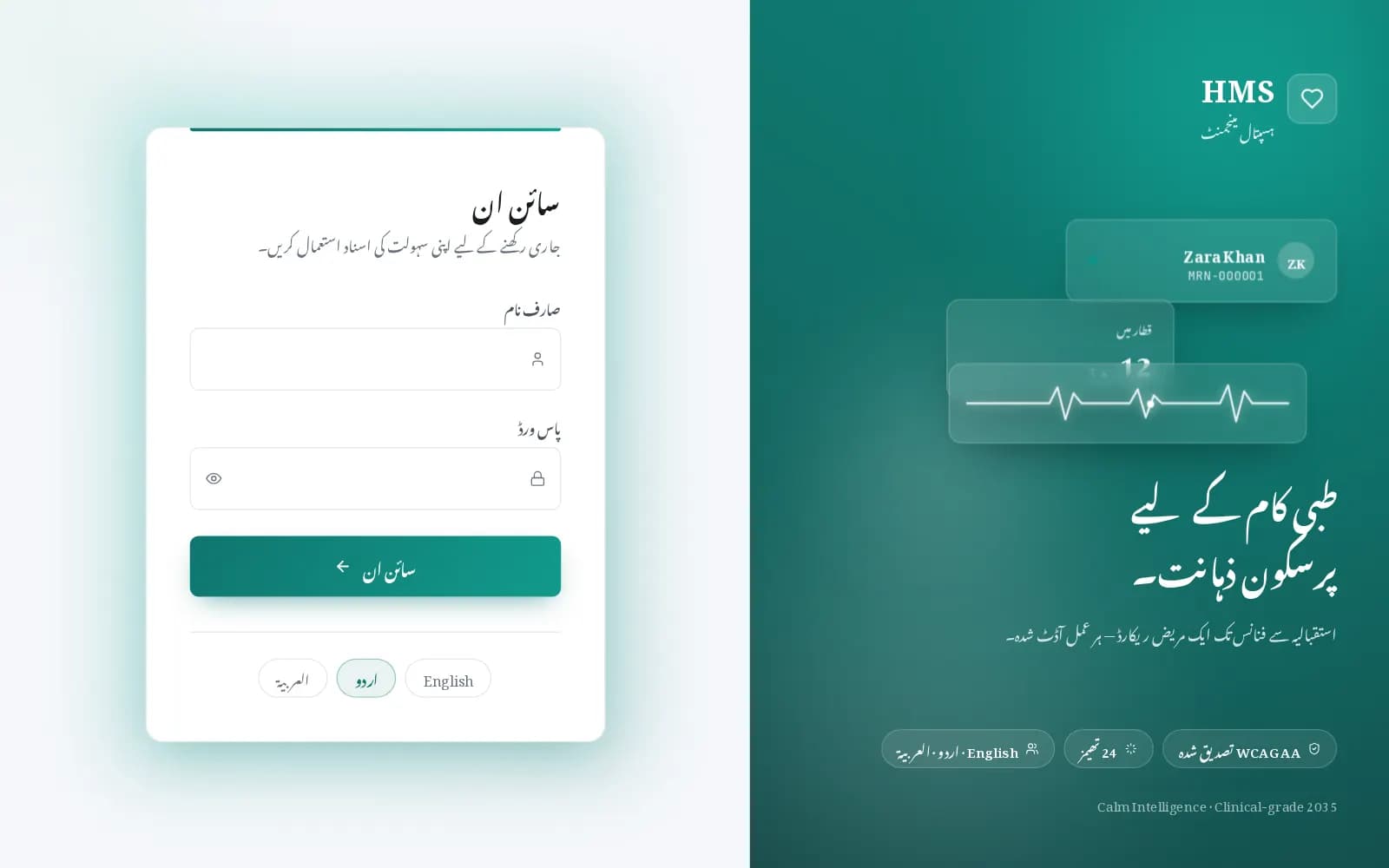
Hospital software in Urdu: Hospital Management System kya hai, OPD، لیب، فارمیسی، بلنگ اور زکوٰۃ فنڈ ایک سسٹم میں، اردو میں مکمل رہنمائی۔
اقرأ المقال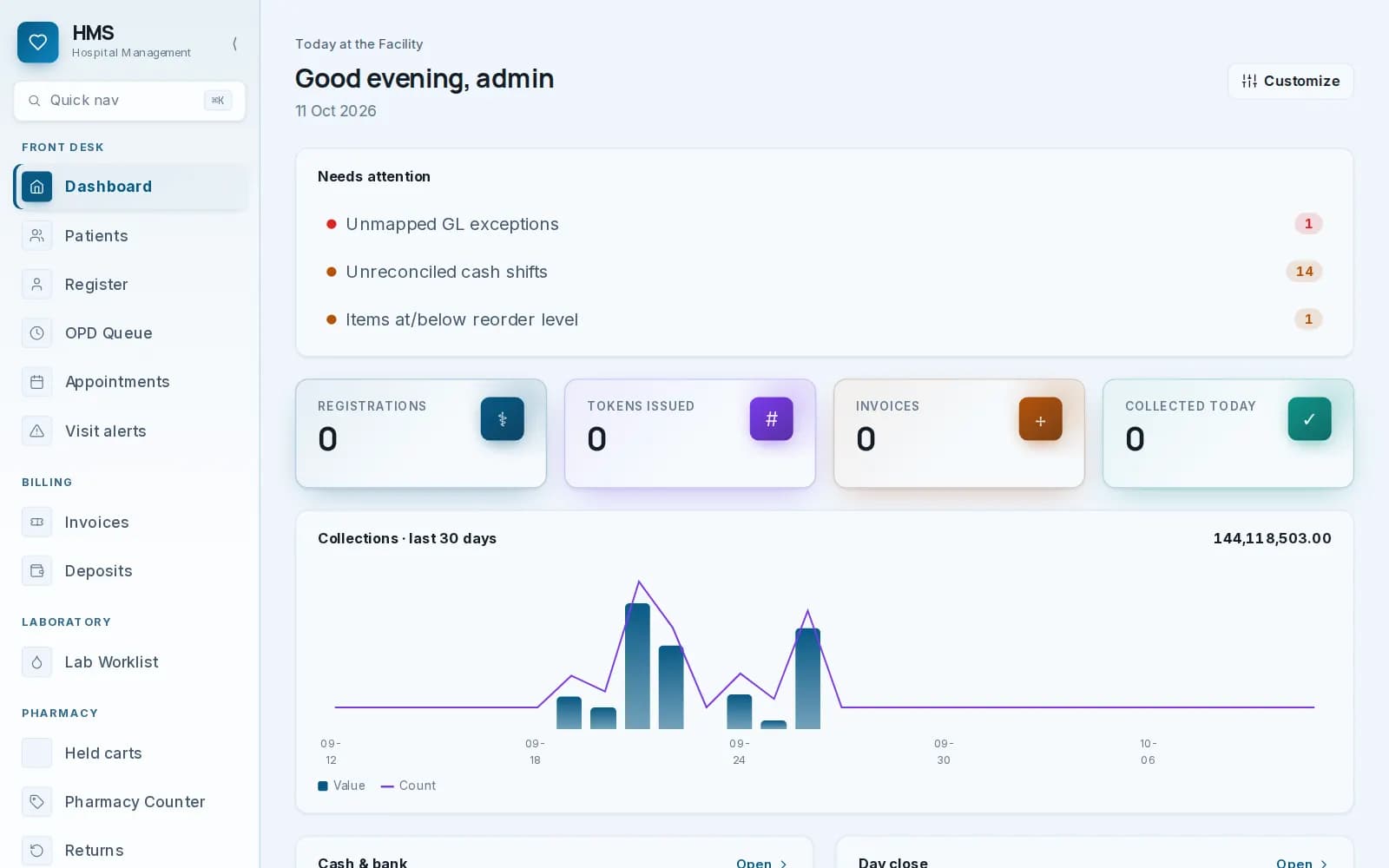
How we built hospital management software for a trust eye hospital in Chishtian, moved it to the web as EHMS, and why it beat SAP and Odoo for them.
اقرأ المقال