ریئل اسٹیٹ سافٹ ویئر اردو میں: ہاؤسنگ اسکیم چلانے والوں کے لیے مکمل رہنمائی
پلاٹ بکنگ، اقساط کی ریکوری، ڈیلر کمیشن، زمین مالکان اور اکاؤنٹس، سب اردو میں۔ 2016 سے بہاولپور، یزمان اور خیرپور ٹامیوالی کے 17 منصوبوں کا تجربہ۔
Read articleHousing society software in Pakistan means two different things. Here is what the developer's office needs for plots, files, installments and dealers, from 17 projects.
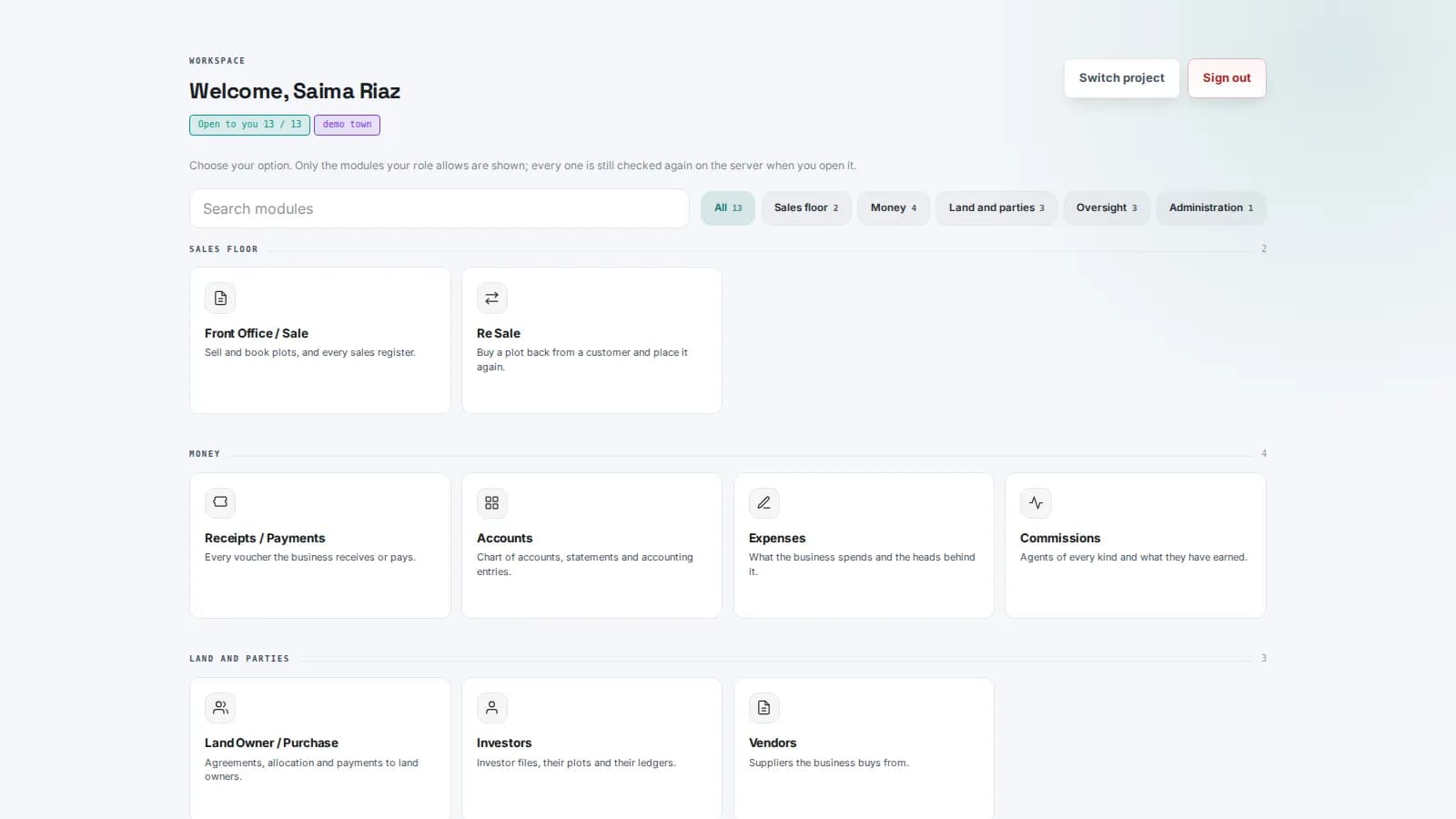
When someone in Pakistan searches for housing society software, they usually mean one of two very different things, and most vendors only build one of them.
The first is software for the society office of a scheme that is still selling: the plot inventory, booking forms, files, installment plans, dealers, land owners and the accounts behind all of it. The second is software for a society that is already built and lived in: maintenance bills, gate passes, complaints and the residents' association.
I have spent ten years on the first kind. Our software, now called Turner 10, has run 17 projects in Bahawalpur, Yazman and Khairpur Tamewali since 2016, starting with Al Rahim Town. This post is about what the society office of a selling scheme actually needs, so you can tell a real system from a brochure.
Ask yourself where your daily problems are.
If they are at the sales counter and in recovery, which plot is free, who has paid, which dealer gets what, how much the land owner is still owed, then you need software for the developer's office. That is what this post covers.
If they are after possession, residents' monthly charges, water and security bills, gate entries and complaints, you need resident management software. That is a different product. Turner 10 does not do it, and I would rather tell you that now than have you find out after a demo.
Many schemes need both, in that order. Selling and recovery come first, because that is where the money is for the next ten years.
Everything in a society office hangs off one register: every plot, its block or sector, its size, its type and its status. If this register is wrong, everything built on it is wrong.
In Turner 10 the plot register lives in Admin. You can add a single plot or a whole block at once, and plot definitions cover sites, blocks, sectors, floors, plot types and units of measure, so a 5 marla residential plot and a commercial unit on the ground floor are both described properly. On the sales floor, the Available Plots list shows what is still open to sell, by block and size.
A plot sale in a Pakistani society is not one transaction. A booking with an advance, then an agreement, then installments over years. Some customers sell their file back. Some plots are cancelled and placed again at a new price.
The society office needs to see all of that without opening five registers:
Each sale contract also opens into an at-a-glance view: contract value, billed, received, outstanding and recovery against each head.
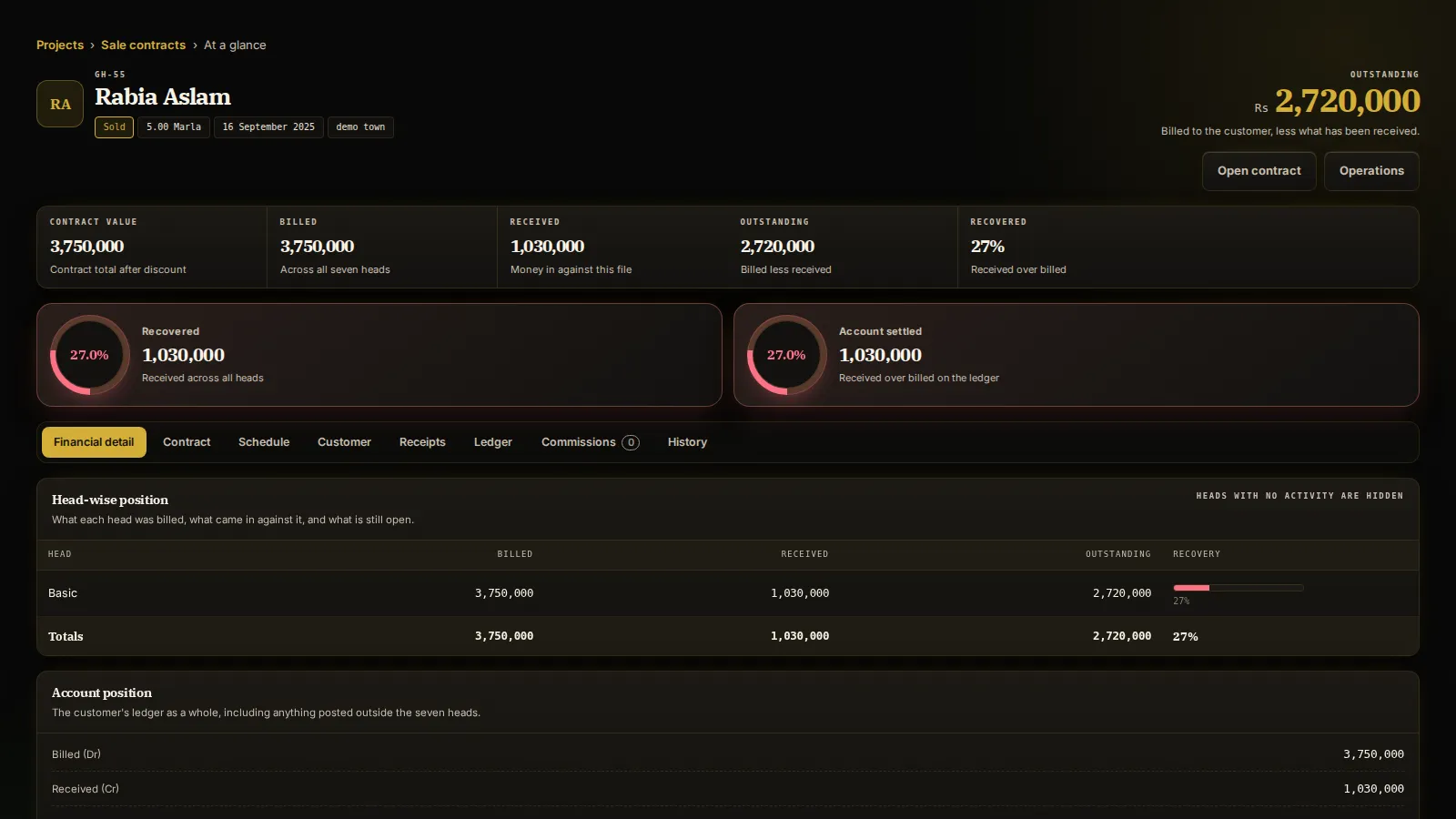
For a selling scheme, recovery is the whole business. The society office needs to start every morning knowing three numbers: what was due to date, what has come in, and what is still out, plus how many installments are overdue and who needs a call today.
In Turner 10 the paid, part-paid or unpaid status of every installment is worked out from the customer's ledger, never typed in by hand. Every follow-up call goes into a phone-call log, every promise goes in as a commitment, and when calls stop working the Legal Notices register takes over. I have written about this in detail in plot installment software: how schemes track installments and defaulters.
Two groups of people expect money from the society office besides staff.
Dealers and sales staff. Agents, freelancers, employee agents, sales officers and investor agents are kept separate, each with their own list and commission payments, because a freelance dealer and a salaried sales officer are not paid the same way.
Land owners. The families whose land became your blocks were usually promised plots and cash in stages. Land Owner / Purchase records the agreement, allocates the land into plots against its fard record, tracks how developed land is split back across owners, and pays each owner against his agreement. When a land owner visits, his account is one screen.
A society office has a counter, a recovery team and an accountant. The usual problem is that the three never agree at month end.
In Turner 10 every receipt and payment posts a balanced journal entry at the moment it is entered, and a voucher can never be deleted, only corrected. The chart of accounts runs four levels deep, and the Daybook, Trial Balance, Balance Sheet, Income Statement and Account Ledger come straight from those entries. Payroll and expenses post to the same books.
Most developers I work with do not stop at one scheme. The Al Rahim group alone ran seven projects on our software. Each scheme is its own workspace, with a Head Office workspace above them, and staff only see the projects and modules their role allows, checked again on the server every time a module opens.
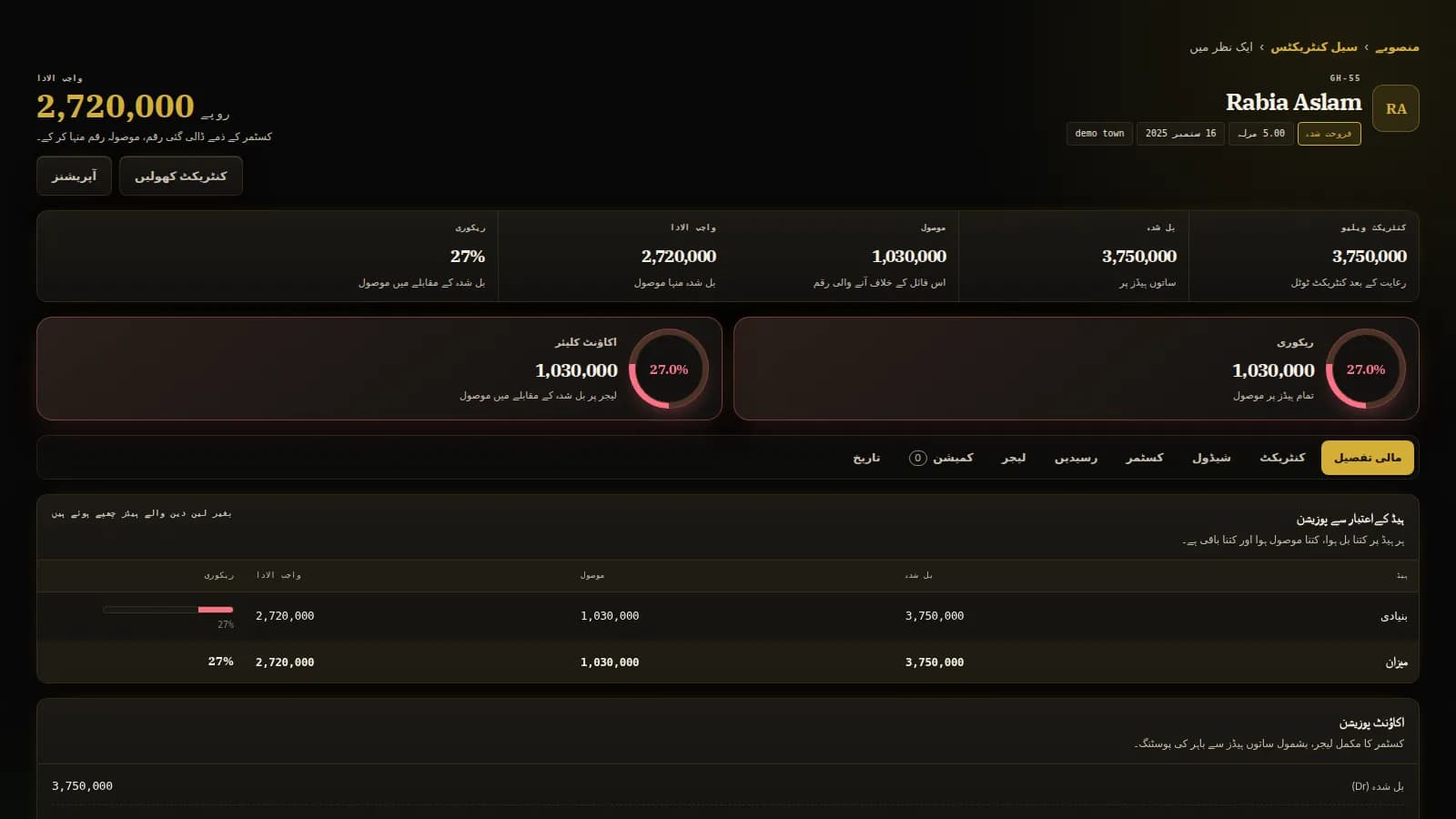
The people who use a society office system all day think and talk in Urdu. Turner 10 runs fully in Urdu, right to left, with Nastaliq or Naskh text, and each user can switch between Urdu, English and Arabic. There is a full Urdu guide to the software if you would rather read it in Urdu.
What is housing society software? In Pakistan the term covers two things: software for the office of a scheme that is selling plots (plot register, bookings, files, installments, dealers, land owners and accounts), and software for a built society's residents (maintenance bills, gate entry, complaints). Turner 10 is the first kind.
How much does housing society software cost in Pakistan? It depends on how many schemes and modules you need and how much data has to be moved across from registers and Excel. Our cost calculator gives a rough range in a minute.
Can it handle more than one society? Yes. Each society is its own workspace under one login, with a Head Office workspace on top.
Does it work in Urdu? Yes, fully, with a right-to-left layout.
Where is it used? Since 2016 it has run 17 projects in Bahawalpur, Yazman and Khairpur Tamewali, including seven Al Rahim projects, Qamar Garden Phase 1 and 2, Ajmal Garden, Ghafoor Town, Al Arafat Town and Green Town.
If your society office runs on registers and Excel, send us your rough numbers: how many plots, how many files on installments and how many schemes. We will come back within 48 hours with a written plan and a price. Read the full guide to real estate software in Pakistan, see the Turner 10 case study, or book a 30-minute call.
Answer three quick questions and we'll send you a written plan with scope, team, timeline and estimate.
Monthly note
What worked on real client projects, what didn't, and the numbers behind it. Short enough to read over coffee.
پلاٹ بکنگ، اقساط کی ریکوری، ڈیلر کمیشن، زمین مالکان اور اکاؤنٹس، سب اردو میں۔ 2016 سے بہاولپور، یزمان اور خیرپور ٹامیوالی کے 17 منصوبوں کا تجربہ۔
Read article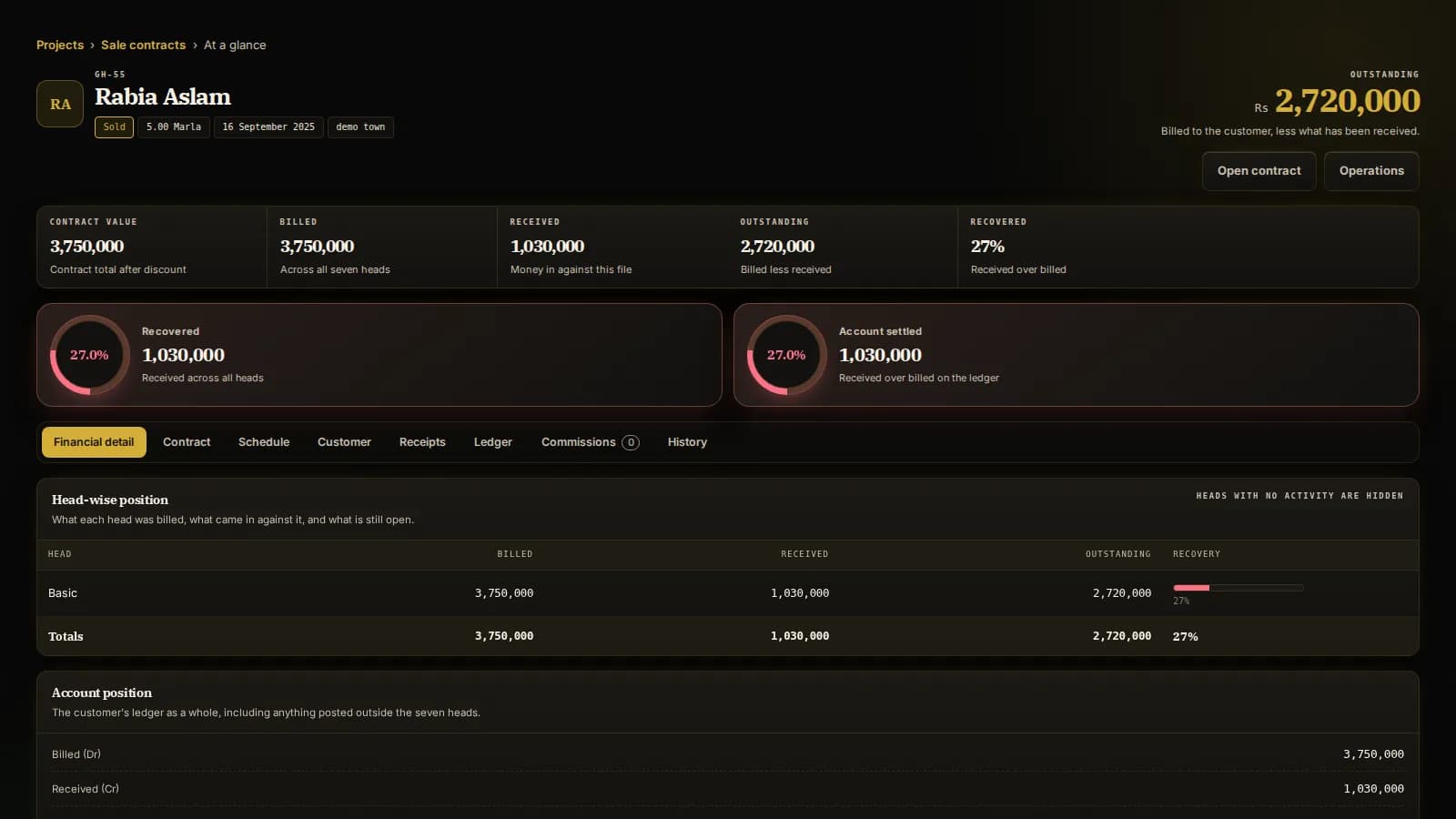
What real estate software must do for a housing scheme in Pakistan, from 17 projects in Bahawalpur, Yazman and Khairpur Tamewali: features, Urdu, cost, payback.
Read article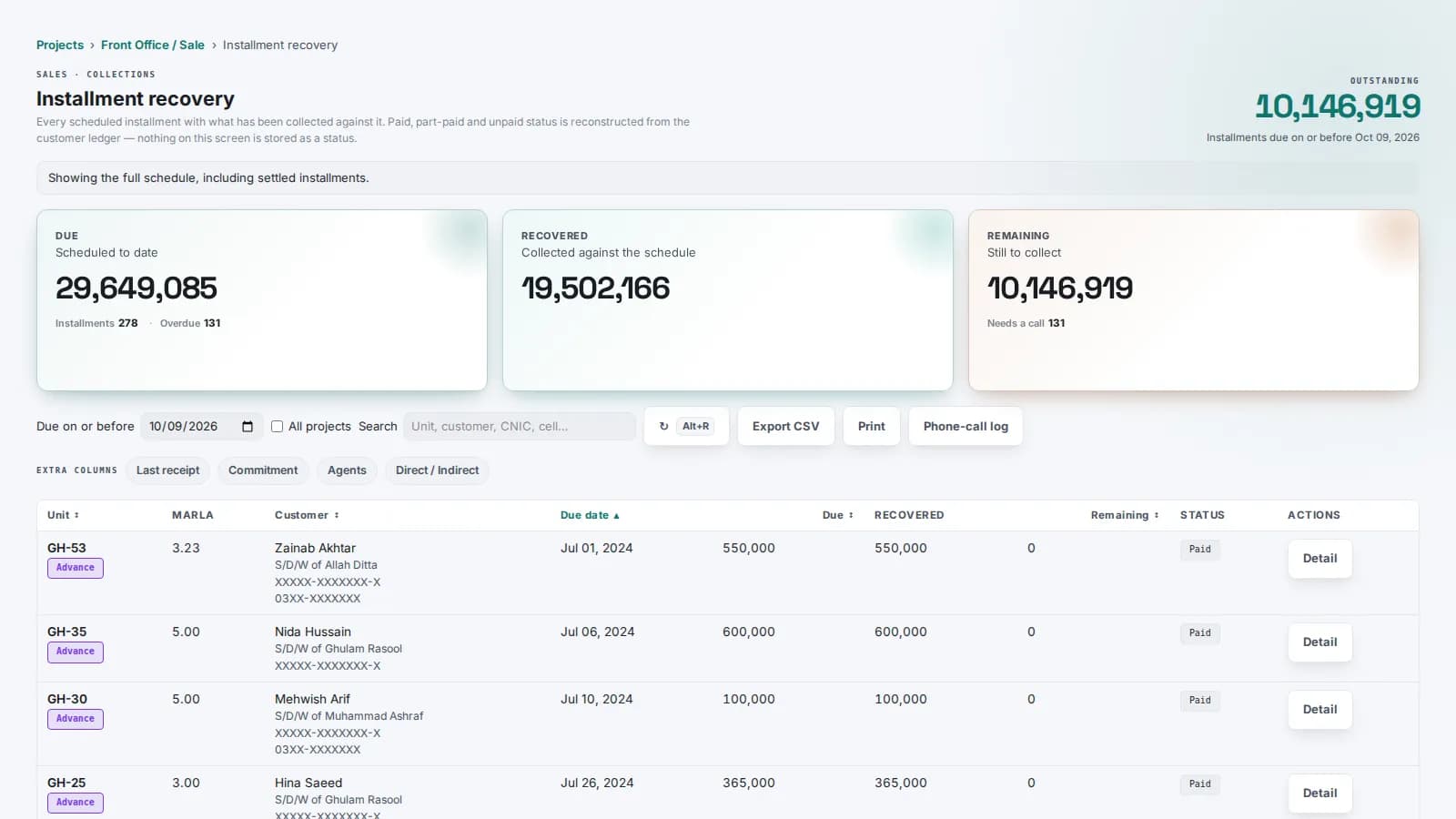
How plot installment software should track schedules, part payments, overdue files and defaulters for a housing scheme in Pakistan, from the team behind Turner 10.
Read article