ریئل اسٹیٹ سافٹ ویئر اردو میں: ہاؤسنگ اسکیم چلانے والوں کے لیے مکمل رہنمائی
پلاٹ بکنگ، اقساط کی ریکوری، ڈیلر کمیشن، زمین مالکان اور اکاؤنٹس، سب اردو میں۔ 2016 سے بہاولپور، یزمان اور خیرپور ٹامیوالی کے 17 منصوبوں کا تجربہ۔
Read articleHow plot installment software should track schedules, part payments, overdue files and defaulters for a housing scheme in Pakistan, from the team behind Turner 10.
Ask the owner of any housing scheme in Pakistan what keeps him up at night and the answer is rarely sales. It is installments. Plots sell in a season. Installments run for years, and every month some of them do not arrive.
Plot installment software exists for that one problem: knowing, every morning, exactly who owes what, who has gone quiet, and what was promised on the last call. I have built and run this kind of software since 2016, first for Al Rahim Town in Bahawalpur, and it has since run 17 projects across Bahawalpur, Yazman and Khairpur Tamewali as Turner 10. This post walks through how installment tracking should actually work, step by step.
A register is good at one thing: recording who paid. It is bad at the thing that matters, which is who did not pay.
With 300 or 400 files on installments, nobody can scan a register and see that a customer on block C has missed his 10th for the second month running. Excel helps until two people edit two copies. The recovery officer rebuilds his call list by hand every morning, and the accountant spends days at month end matching receipt books to the bank. By the time a missed installment is noticed, it is two installments, and the conversation is harder.
Good plot installment software starts at the sale, not at the first missed payment. When a plot is booked, the agreement sets the advance and the installment plan, and that becomes the file's schedule: every due date and every amount, for the life of the file.
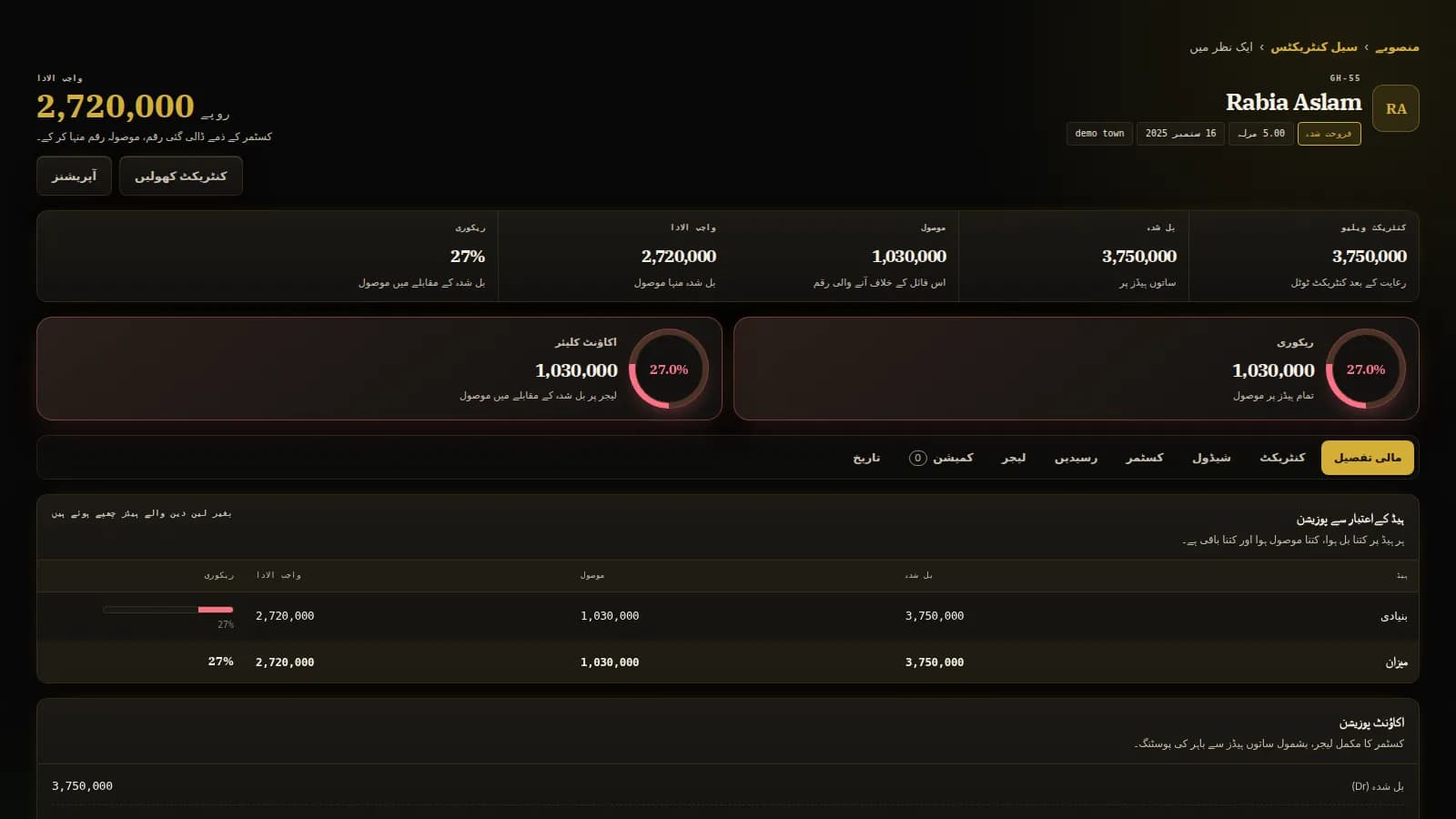
In Turner 10 the schedule is part of the sale contract. Each contract opens into an at-a-glance view showing contract value, billed, received, outstanding and recovery against each head, with tabs for the schedule, receipts, ledger, commissions and history.
This is the detail that separates real installment software from a glorified spreadsheet.
If someone has to tick "paid" next to an installment, someone will eventually tick the wrong one. In Turner 10, whether an installment is paid, part-paid or unpaid is worked out from the customer's ledger every time the screen opens. A part payment of 20,000 against a 30,000 installment shows as part-paid with 10,000 still open. Nobody types a status, so nobody can type it wrongly, and the recovery screen and the accounts can never disagree.
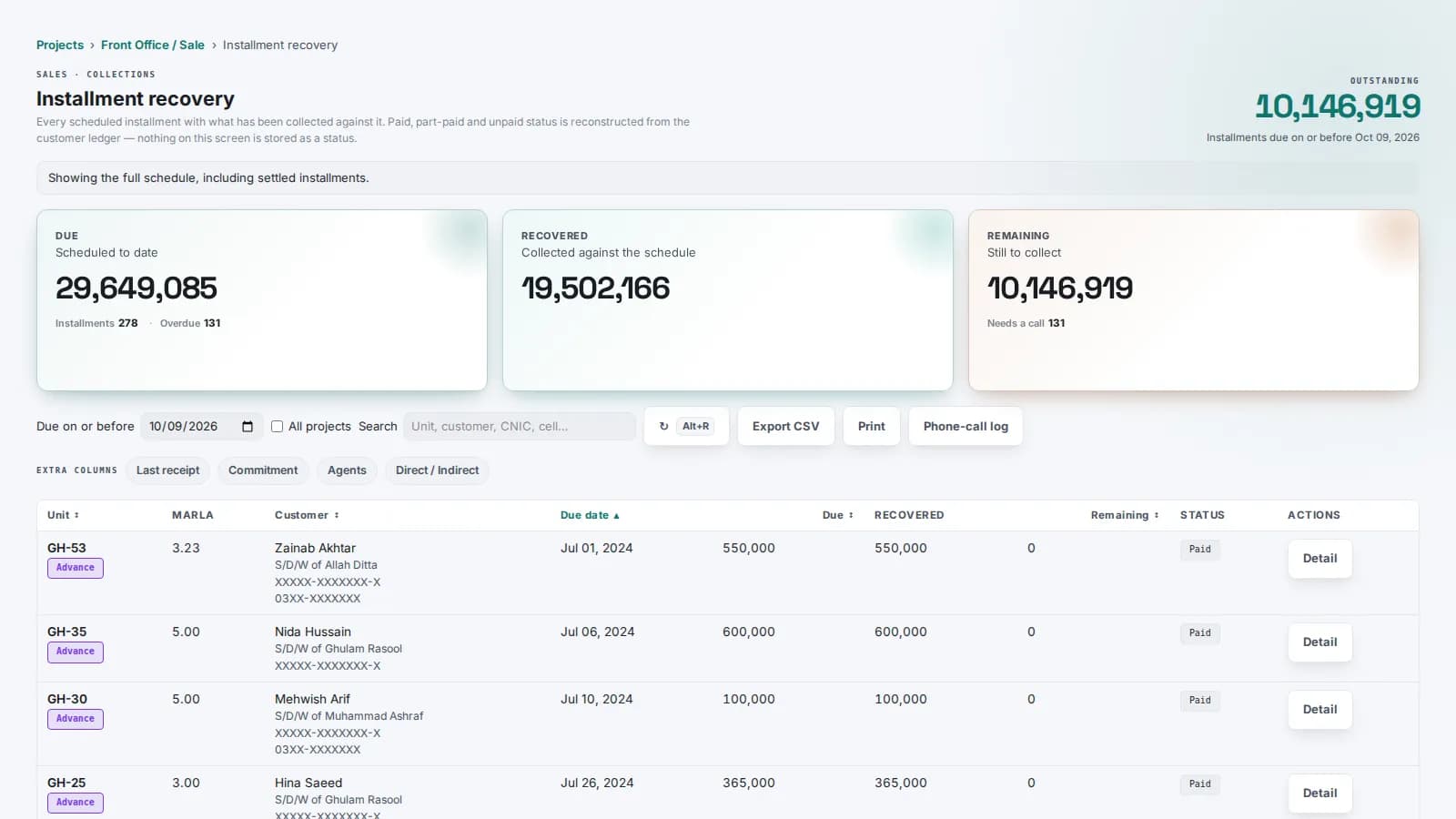
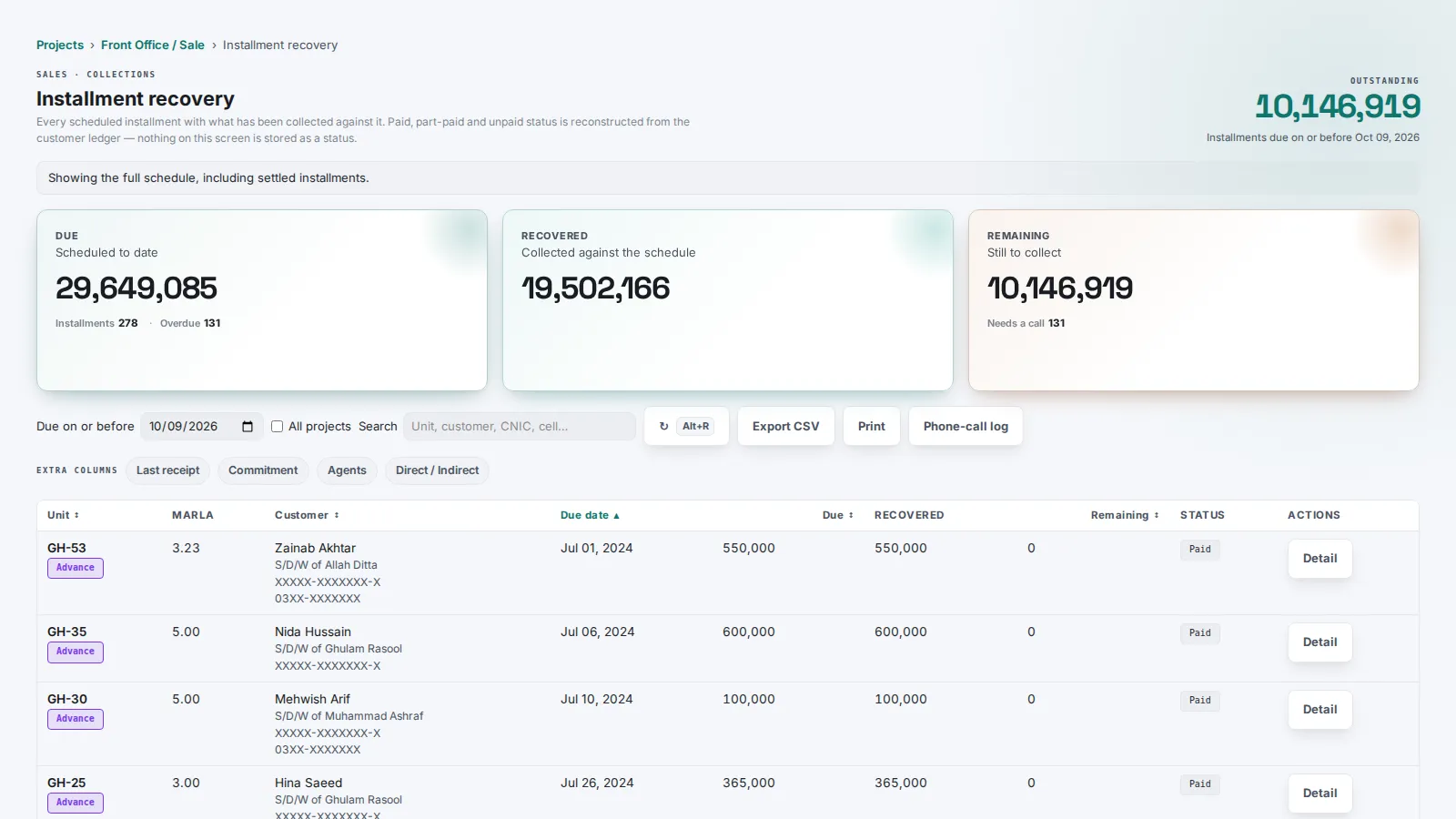
The Installment Recovery screen opens on three numbers: due to date, recovered against the schedule, and still to collect. Under them, how many installments there are, how many are overdue, and how many customers need a call today.
Below that is the working list: every installment, every plot and every customer, with the due date, amount due, amount recovered and what remains. You can filter by due date and project, and search by unit number, customer name, CNIC or mobile. Extra columns show the last receipt, the customer's latest commitment, the agent on the sale, and whether it was a direct or dealer sale, which matters when you decide who should make the call.
A recovery team loses most of its time to repetition: calling the same customer without knowing what the colleague heard yesterday.
Every follow-up in Turner 10 goes into a phone-call log tied to the customer, and every promise the customer makes goes in as a commitment. When the next officer opens the file, he sees "promised to pay on the 15th" instead of starting again. When the 15th comes and goes, that is a different conversation from a first reminder, and the officer knows it.
The list also exports to CSV and prints. I used to think printing was a habit software should fix. It is not. In our part of the world, recovery officers still take a printed list into the field, and they are right to.
Some files stop answering. The software should make the next step formal, not leave it in a WhatsApp chat.
Turner 10 has a Legal Notices register for notices raised against defaulting customers, with each notice's stage and escalation, next to the recovery phone-call history. If a file ends in cancellation, it is recorded under Cancelled Plots, and the Profit / Loss on Cancellation register shows what that cancellation cost or earned. Files bought back from customers are handled through Re Sale and listed separately.
Every installment receipt in Turner 10 posts a balanced journal entry the moment it is entered, and a voucher can never be deleted, only corrected. The Daybook, Trial Balance, Balance Sheet, Income Statement and Account Ledger come straight from those entries. There is no second posting at month end and no gap between what recovery collected and what the accountant sees.
Once installments are tracked this way, a few numbers tell you how recovery is really going:
If you want to put a rupee value on better recovery for your own scheme, I worked through the numbers in the guide to real estate software in Pakistan.
What is plot installment software? Plot installment software tracks every installment of every plot file in a housing scheme: the schedule from the sale agreement, payments and part payments, overdue installments, follow-up calls, customer commitments and legal notices for defaulters, with every receipt posted to the accounts.
Can it handle part payments? Yes. Status is worked out from the customer's ledger, so a part payment shows as part-paid with the balance still open.
Can it send defaulters to legal notices? Turner 10 keeps a Legal Notices register with each notice's stage and escalation, alongside the call log for that customer.
How much does plot installment software cost? It depends on the number of schemes, the modules you need and how much data has to move across from your registers. A short call gets you an exact quote.
Is it available in Urdu? Yes, fully in Urdu with a right-to-left layout. Read the Urdu guide.
Send us how many files you have on installments, your average installment and how many schemes you run. We will reply within 48 hours with a written plan and what better recovery could be worth for your scheme. You can also read about housing society software for the developer's office or see the Turner 10 case study.
Answer three quick questions and we'll send you a written plan with scope, team, timeline and estimate.
Monthly note
What worked on real client projects, what didn't, and the numbers behind it. Short enough to read over coffee.
پلاٹ بکنگ، اقساط کی ریکوری، ڈیلر کمیشن، زمین مالکان اور اکاؤنٹس، سب اردو میں۔ 2016 سے بہاولپور، یزمان اور خیرپور ٹامیوالی کے 17 منصوبوں کا تجربہ۔
Read article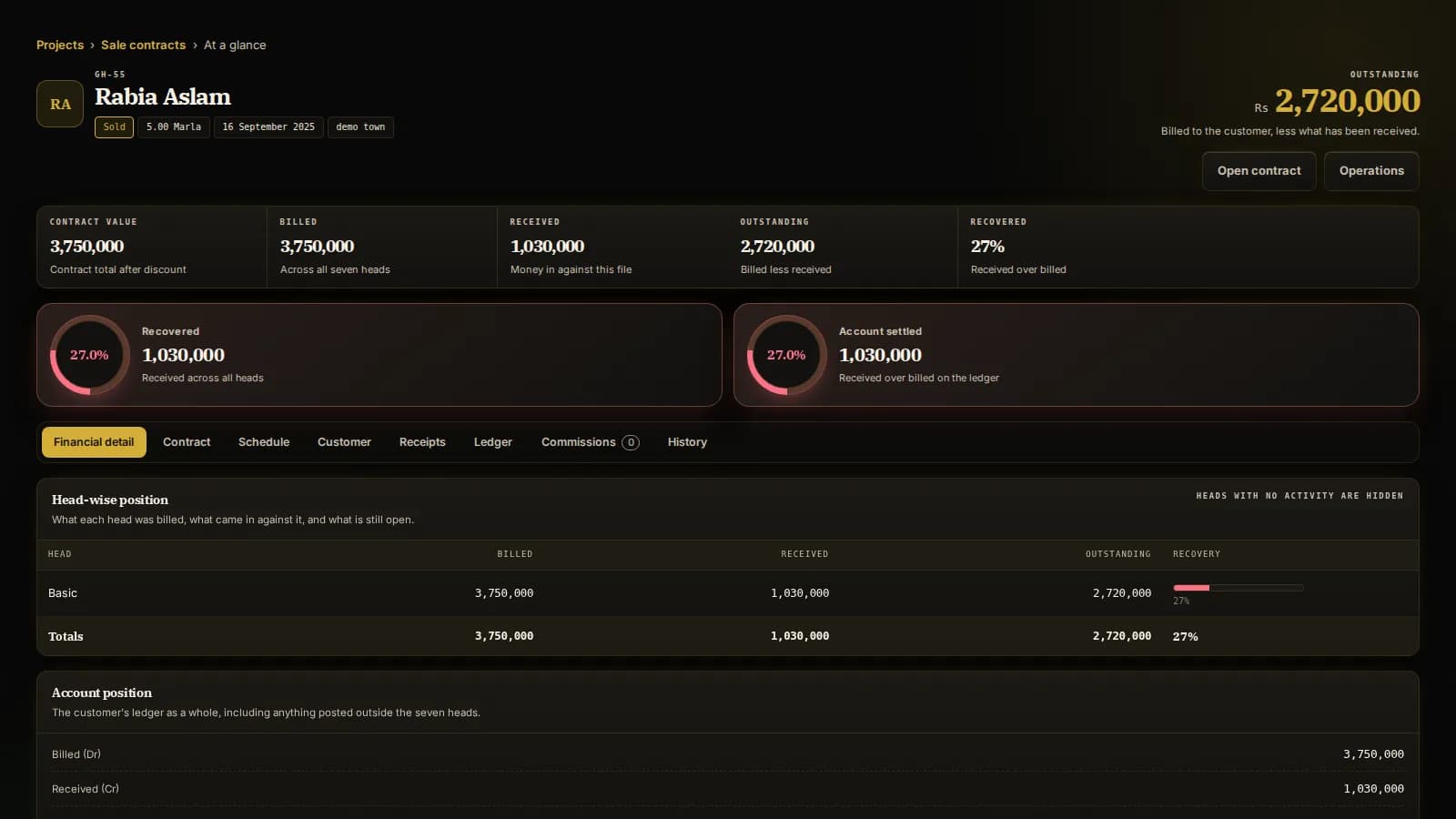
What real estate software must do for a housing scheme in Pakistan, from 17 projects in Bahawalpur, Yazman and Khairpur Tamewali: features, Urdu, cost, payback.
Read article
Housing society software in Pakistan means two different things. Here is what the developer's office needs for plots, files, installments and dealers, from 17 projects.
Read article