Healthcare · Kuwait
Hospital Management Software in Kuwait
A private hospital in Kuwait serves three kinds of patient at the same counter: people who pay cash, employees billed to their company, and patients whose insurer or third-party administrator (TPA) has to approve the visit. EHMS, the hospital ERP we built and run for a trust eye hospital in Pakistan, keeps all three on one patient record in Arabic and English, registered by Civil ID. For a hospital or clinic in Kuwait City, Hawalli, Salmiya or Jahra, we connect it to the insurers and TPAs you bill most. Kuwait has no VAT, so invoices stay simple, and Pakistan is two hours ahead, so we work your full day.
In short
Hospital management software in Kuwait runs registration, clinics, lab, pharmacy, billing and accounts while handling cash, corporate and insured patients side by side: company accounts and monthly statements, insurer and TPA approvals, and claims in each payer's format. EHMS by Eaquirs Tech covers this in Arabic and English, with patients registered by Civil ID; connections to each insurer's or TPA's portal are built per project. A hospital system typically costs $19,000 to $31,000, and a clinic edition $11,500 to $19,000.
- Civil ID and payer details on the patient record
- Cash, corporate and insured billing at one desk
- Coverage, pre-approval, claims and denials already in EHMS
- Company accounts with one monthly statement
- Pakistan is two hours ahead: we work your full day
EHMS in Arabic
Screens from the live EHMS demo, switched to Arabic.
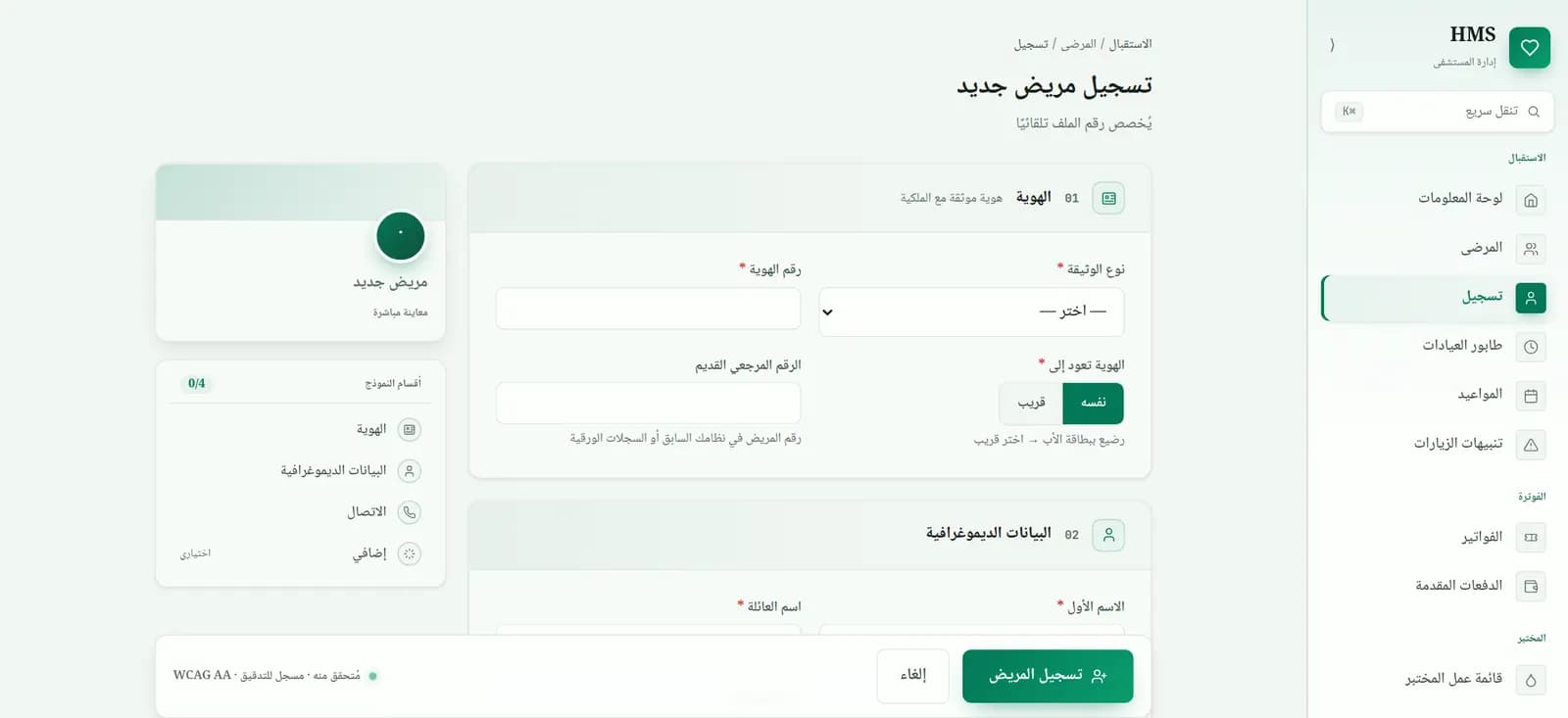
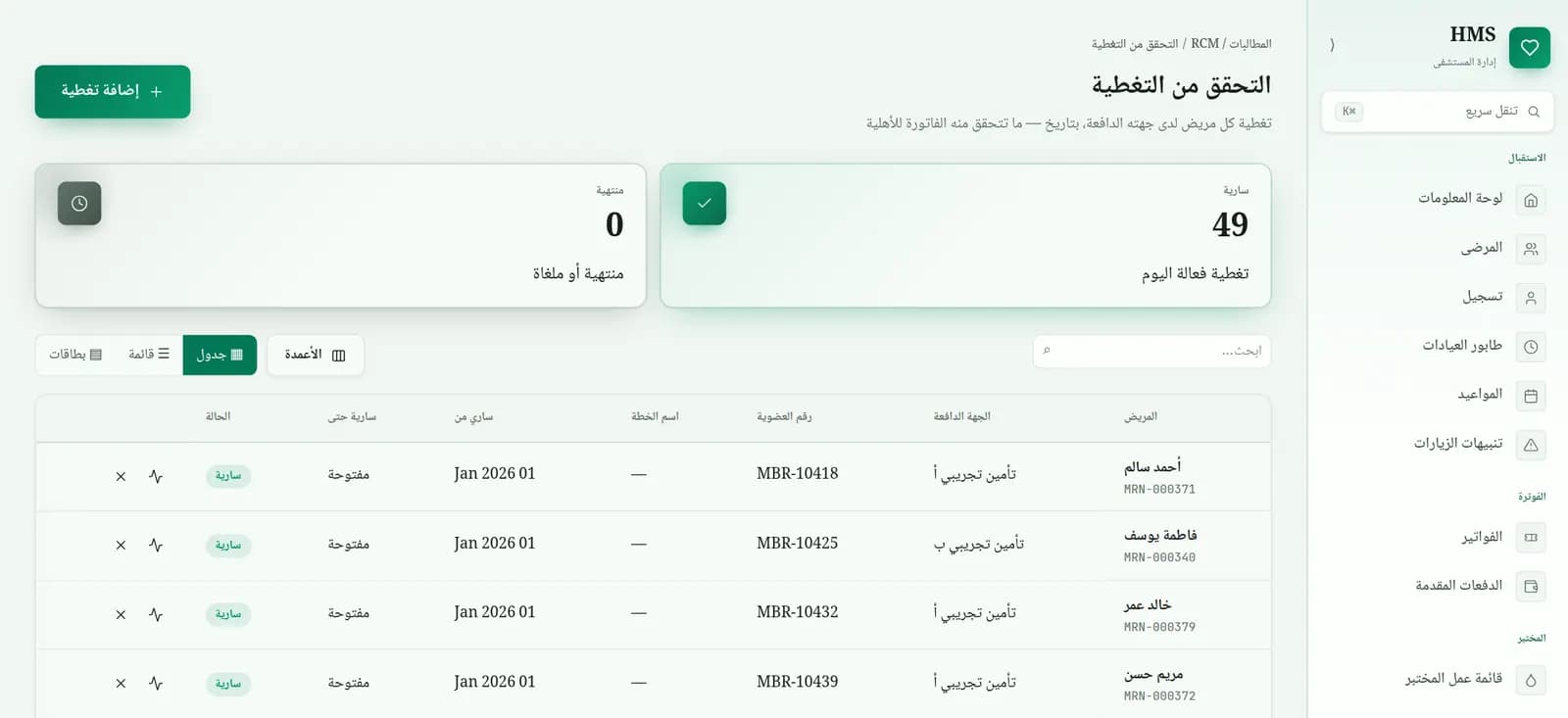
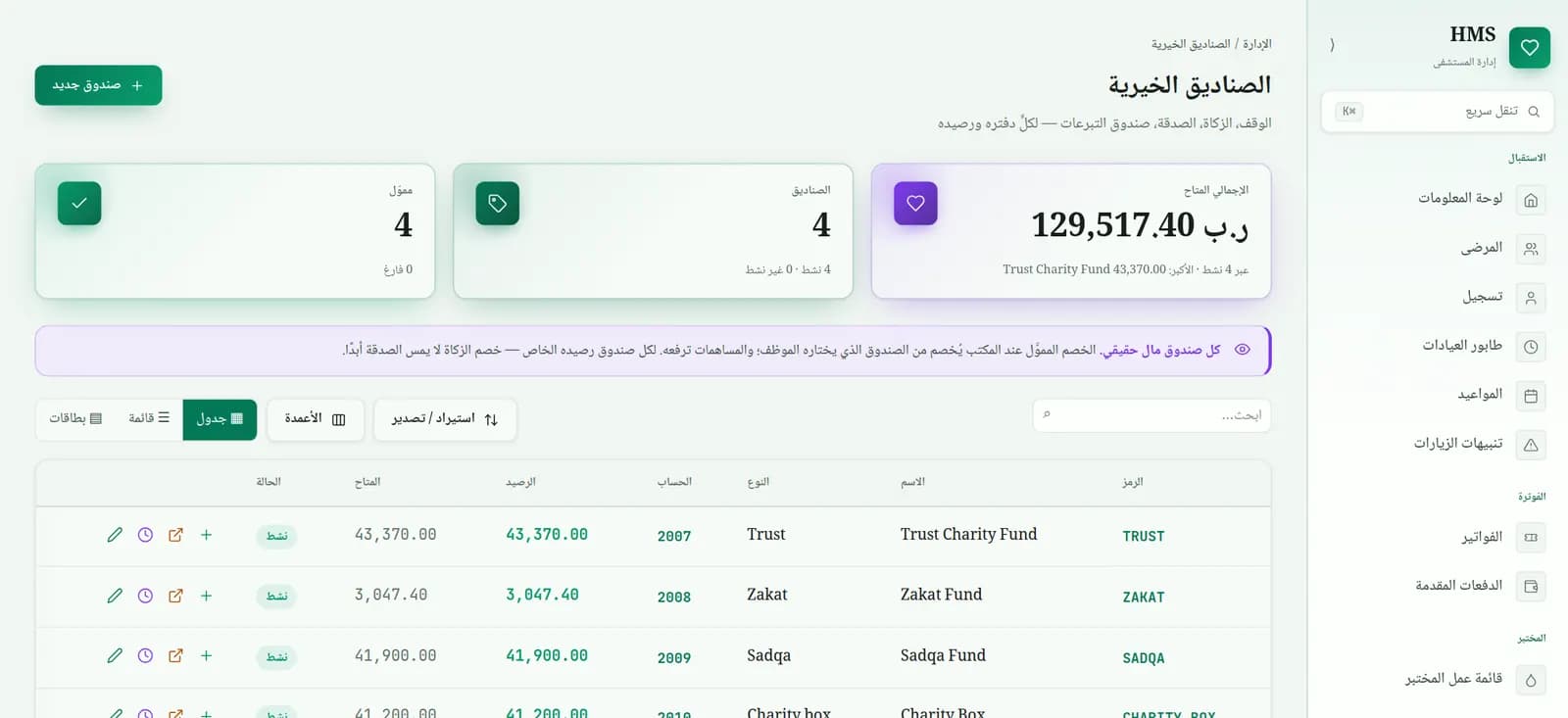
Three kinds of patient, one desk
Most private hospitals in Kuwait see all three every day. EHMS shows reception which one is at the counter before the bill is made.
- Cash patientPays at the counter. The receipt and the ledger entry are created together, and the day closes against the cashier's shift.
- Corporate patientBilled to the employer's account at the company's agreed rates. The company gets one monthly statement instead of a pile of receipts.
- Insured patientCoverage checked and approval requested from the insurer or TPA. The patient pays only the co-pay, and the rest becomes a claim.
Live walkthrough
One healthcare workflow, end to end.
ReceptionPatient registered with Civil ID
1/6 stepsSimulated run showing how data moves through a system like the one we build for healthcare.
Sound familiar?
- A different portal for every TPAApprovals and claims are typed again into each insurer's or TPA's portal, and rejections arrive by email.
- Corporate accounts tracked on paperCompany patients, agreed rates and monthly statements live outside the hospital system.
- Approvals that hold up the queuePatients wait at reception while staff phone the TPA to ask whether the visit is covered.
- Cash that doesn't match the shiftCounters close the day with totals that don't match the receipts, and nobody can see which shift is short.
What we build
- Cash, corporate & insured billingOne invoice per visit, split between the patient, the company account and the payer, with separate rate lists per company and insurer.
- Insurance, TPAs & claimsEHMS already has coverage check, pre-authorization, a claims register, a denial work queue and payer ageing; the link to each insurer's or TPA's portal or file format is built for your payers.
- Patient registration & Civil IDOne record per patient with Civil ID, payer details, visits and documents.
- OPD & appointmentsDoctor schedules, tokens and consultation notes.
- Clinical codingICD-10 diagnoses on every encounter, plus the procedure codes each insurer or TPA asks for, checked before the claim is sent.
- LaboratoryDigital orders, sample tracking and result entry with abnormal values flagged.
- Pharmacy & inventoryE-prescriptions, dispensing, automatic stock deduction and a controlled drug register.
- Accounts & cash shiftsLedgers, cashier shifts, receivables ageing per company and payer, bank reconciliation and period closing. No VAT to configure in Kuwait.
- Multi-branchSeveral clinics or hospitals on one system, with head-office reports across branches.
Where AI helps
- Approvals checked against each payer's rules before they go to the insurer or TPA
- Monthly company statements drafted and checked before they are sent
- Visit summaries drafted in Arabic or English for the doctor to approve
Hospital software for the Gulf
Built and running

Common questions
Can it work with insurers and TPAs in Kuwait?
Yes. EHMS already has coverage check, pre-authorization, a claims register, a denial work queue and payer ageing. Each insurer or TPA has its own portal or file format, so we connect to the ones your hospital bills most and test each one with them before go-live.
Can we bill companies monthly instead of per visit?
Yes. Corporate patients are billed to their employer's account at the company's agreed rates, and the company receives one statement for the month with each visit listed. Payments are matched against the statement in the receivables ageing.
Have you deployed EHMS in Kuwait?
Not yet. EHMS runs at two hospitals in Pakistan, including a trust eye hospital in Chishtian. A hospital in Kuwait would be among our first in the Gulf, so payer connections and company billing go into a written scope and a test environment before go-live.
How is hospital software priced in Kuwait?
In US dollars: typically $19,000 to $31,000 for a hospital and $11,500 to $19,000 for a clinic edition, the same ranges as our cost estimator. The number of insurers and TPAs you connect moves it most. The exact price comes in a written plan after we see the facility, and the plan is yours whether or not you work with us.
Where is patient data hosted?
Where your management and the Ministry of Health's rules require: on a cloud region in the Gulf or on a server in your hospital. We agree the hosting in the written plan before anything is built.
Free 30-minute call
Talk to the founder and leave with a plan.
There's no sales script. Before we talk, our AI agents map out your scope and pull up similar projects we've done, so the 30 minutes go on real answers about approach, timeline and a budget range.
YouYou pick a time and add one line about the project
1/5 steps- 30 minutes on Google Meet, Zoom or WhatsApp
- We'll tell you honestly if we're not the right fit
- A free written plan once we've talked
- NDA before you share details
- You own the code and IP
- Code in your repository
- Pay per milestone